


Nantong Kezhong Chemical Technology Co., Ltd.:Your Trustworthy Triethyl Aluminium Manufacturer!
Nantong Kezhong Chemical Technology Co., Ltd. is a professional supplier of organic peroxides, acyl chloride series and basic chemicals.The company has self import and export qualification, and is committed to providing competitive products and perfect solutions for users at home and abroad. The products sell well in Chinese Mainland, Chinese Taiwan, Europe, America, India and other countries and regions.
Leading Service
We are committed to constantly innovating our products to provide foreign customers with a large number of high-quality products to exceed customer satisfaction. We can also provide customized services according to customers' requirements such as size,color,appearance,etc.We can provide the most favorable price and high-quality products.
Quality Guaranteed
We have been continuously researching and innovating to meet the needs of different customers. At the same time, we always adhere to strict quality control to ensure that the quality of every product meets international standards.
Wide Sales Countries
We focus on sales in overseas markets. Our products are exported to Europe, America,Southeast Asia,the Middle East and other regions, and are well received by customers around the world.
Various Types of Products
Our products include Organic peroxides: Tert-butyl peroxybenzoate , dibenzoyl peroxide, di-tert-butyl peroxide, tert-butyl hydrogen peroxide, 2,5-dimethyl-2,5-bis (tert-butylperoxy) hexane, and bis (2,4-dichlorobenzoyl peroxide), totaling 5000 tons/year. Acyl chloride series and basic chemicals: acryloyl chloride, methacryloyl chloride, p-chlorobenzoyl chloride, benzophenone (refined grade), oxalyl chloride, benzoyl chloride, etc., totaling 15000 tons/year.
Our Related Products

Oxalyl chloride is a diacyl chloride derived from oxalic acid. It is a colorless fuming liquid with pungent smell, which can be prepared by the reaction of oxalic acid and Phosphorus pentachloride. It can decompose violently when exposed to water and ethanol. It is corrosive and tear inducing.Its CAS number is 79-37-8. Oxalyl chloride is also known as Oxalyl dichlorideand Ethanedioyl dichloride.It is mainly used as a reagent for organic synthesis.

Acryloyl Chloride | CAS 814-68-6
Acryloyl chloride is a colorless flammable liquid with a corrosive and irritating odor.Its CAS number is 814-68-6.Acryloyl chloride is toxic, highly flammable and corrosive.It can cause burns, and is irritating to the eyes and respiratory system.

Methacryloyl Chloride | CAS 920-46-7
Methacryloyl chloride is a colorless, transparent, and clear liquid.Its CAS number is 920-46-7.
Methacryloyl chloride is also known as 2-Methyl-2-Propenoyl chloride.It is highly flammable.

DHBP | CAS 78-63-7 | 2,5-Dimethyl-2,5-Di(Tert-Butylperoxy)Hexane
2,5-Dimethyl-2,5-di(tert-butylperoxy)hexane is a dialkyl organic peroxide.It is a low volatility, slightly yellow clear liquid. Its CAS number is 78-63-7.It can be diluted with hexane, odorless mineral oil, isododecane, etc. It can also be diluted with inorganic compound or polypropylene powder.

BPO | CAS 94-36-0 | Dibenzoyl Peroxide
Dibenzoyl peroxide is a white granular,slightly bitter almond smell.Its CAS number is 94-36-0.It is a strong oxidizer,highly unstable and flammable.When impacted, heated or rubbed, it can explode.When sulfuric acid is added, combustion occurs.

TBPB | CAS 614-45-9 | Tert-Butyl Peroxybenzoate
Tert-butyl peroxybenzoate is an organic peroxide.Its CAS number is 614-45-9.It is a colorless to slightly yellow liquid and has a slight aromatic odor.It is insoluble in water and soluble in organic solvents.

BIBP | CAS 25155-25-3 | Bis(Tert-Butyldioxyisopropyl)Benzene
Bis(tert-butyldioxyisopropyl)benzene is white powder.Its CAS number is 25155-25-3.It belongs to the category of peroxide crosslinking agents, which undergo free radical crosslinking during the vulcanization process.

TBHP | CAS 75-91-2 | Tert-Butyl Hydroperoxide
Tert-butyl hydroperoxide is also known as TBHP.Its characteristics are good thermal stability, safe use, and easy to control. At temperatures below 50℃, its activity does not change significantly within three months, and there is no need for expensive frozen storage.

DTAP | CAS 10508-09-5 | Di-Tert-Amyl Peroxide
Di-tert-amyl peroxide is also known as Bis(1,1-dimethylpropyl) peroxide and DTAP.It is a new type of initiator for LDPE.It is used as an initiator in polymerization reactions such as acrylate, ethylene, styrene, and CR polypropylene.
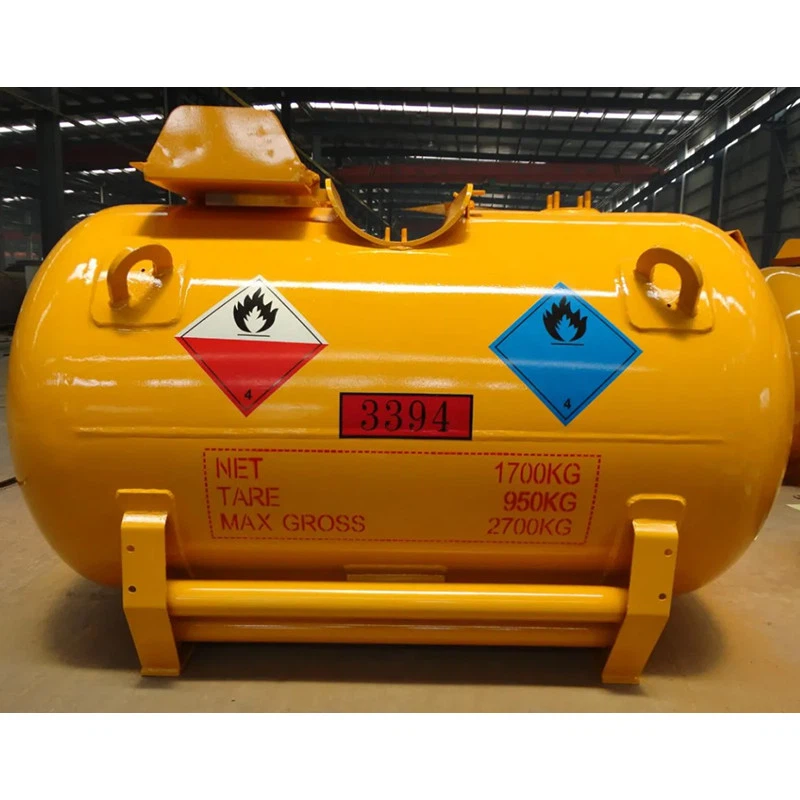
Triethyl aluminium is a colorless transparent liquid.It has strong irritating and corrosive effects, mainly damaging the respiratory tract and conjunctiva. Inhalation of high concentration can cause Pulmonary edema. Inhaling its smoke can cause smoke heat. Skin contact can cause burns, causing congestion, edema, and blistering, with severe pain.Triethyl aluminium is also known as TEAL.Its CAS number is 97-93-8.It is stable at room temperature. When the temperature exceeds 100 ℃, a large amount of decomposition begins. It is sensitive to oxygen, spontaneously ignites in the air, and sometimes explodes. Explosive decomposition occurs when exposed to water and burns.
What You should Know about Triethyl Aluminium
Chemical Properties
Colorless liquid. Miscible with saturated hydrocarbons. The aluminum alkyls are highly flammable and reactive, colorless to yellow liquids at room temperature. The lighter trialkylaluminums ignite spontaneously in air. They are normally supplied and used in a 20% solution with a hydrocarbon solvent, such as hexane, heptane, benzene, toluene. Properties may depend on solvent. Reacts violently with water.
Uses
Triethylaluminum can be used for the preparation of tertiary alcohols, secondary alcohols and polyolefin catalysts, can also be used as raw materials for other organic compounds, aluminum plating can be used for the preparation of tertiary alcohols, secondary alcohols and polyolefin catalysts, can also be used as raw materials for the preparation of other metal organic compounds, aluminum plating. The pure product can be used in metal organic chemical vapor deposition (MOCVD) process and can be used as rocket fuel.
Catalyst intermediate for polymerization of olefins, especially ethylene; pyrophoric fuels; production of α-olefins and long-chain alcohols; gas plating of aluminum.
Triethylaluminum, in combination withmany transition metal complexes, is used as Ziegler-Natta polymerization and hydrogenationcatalyst. Also, it is used as intermediatein organic syntheses.
Triethylaluminum is used as a co-catalyst in the industrial production of polyethylene and for the production of medium chain alcohols. Used as a catalyst in Ziegler-Natta polymerization process for vinyl, olefin, diene polymerizations and linear oligomerization and cyclization of unsaturated hydrocarbons. It is also used as a catalyst to produce ethylene gas, chain growth of ethylene, longer chain aluminum alkyls, and in plating aluminum.
Production Methods
In a typical example, a slurry is prepared containing 7 wt % aluminum powder (0.1 wt% zirconium catalyst content) and 45 wt% recycled triethylaluminum in a paraffin hydrocarbon fraction, boiling range 177 – 260 ℃. The slurry is pumped into the reactor at a rate of 1.5 m3/h, at a reactor temperature of 132 ℃, while hydrogen is introduced at the bottom to maintain a partial pressure of 10 MPa. Excess hydrogen is removed in flash drum, wherein pressure is decreased to 3 MPa and temperature is lowered to prevent thermal reversal of the reaction. In the ethylation reactor sufficient ethylene is added to react completely with the Al – H bonds. Temperature is held at around 85 ℃ or somewhat higher. The addition rate increases with temperature, but carboalumination of ethylene also can occur to formn-butyl groups, especially at higher temperatures. Hydrogen and ethylene partial pressure is kept low in ethylation reactor to minimize hydrogenation of ethylene to ethane and to reduce excess carboalumination products. Excess ethylene and hydrogen are removed in flash drum. A portion of the triethylaluminum product solution is recycled to reactor.
Precautions You Should Know
Reactivity Profile
Triethylaluminum reacts violently with water, alcohols, phenols, amines, carbon dioxide, sulfur oxides, nitrogen oxides, halogens, and halogenated hydrocarbons, causing fire and explosion hazards.
Health Hazard
Exposure to smoke from fire causes metal-fume fever (flu-like symptoms). Since liquid ignites spontaneously, contact with eyes or skin causes severe burns. The health hazard from exposure to thiscompound is attributed to its violent reactionswith many substances, including airand water. Because of its violent reactionwith moisture, skin contact can cause a dangerousburn. Contact with eyes can damagevision.
Fire Hazard
Triethylaluminum is extremely pyrophoric, igniting spontaneously in air. It reacts violently with water, alcohol, halogenated hydrocarbons, and oxidizing substances. Among the alcohols, the lower alcohols, methanol, ethanol, n- propanol, and isopropyl alcohol, react explosively with triethylaluminum. Reactions with lower aldehydes, ketones and amides can be vigorous to violent. It may explode on contact with halocarbons in excess molar ratios or upon slight warming. When heated to 200°C (392°F), it decomposes, liberating ethylene and hydrogen.
Safety Profile
Extremely destructive to living tissue. A very dangerous fire hazard when exposed to heat or flame. Ignites spontaneously in air. Explodes violently in water. To fight fire, use CO2, dry sand, dry chemical. Do not use water, foam, or halogenated fire-fighting agents. Explosive reaction with alcohols (e.g., methanol, ethanol, propanol), carbon tetrachloride, N,N-dmethylformamide + heat. Incompatible with halogenated hydrocarbons; triethyl borane. When heated to decomposition it emits acrid smoke and irritating fumes.
Potential Exposure
Alkyl aluminum compounds are used as components of olefin polymerization catalysts. They are also used in the synthesis of higher primary alcohols and in pyrophoric fuels, as a catalyst in making ethylene gas; and in plating aluminum.
Shipping
Ntial fire or explosion hazard. Shipping: UN3399 Organometallic substance, liquid, water-reactive, flammable, Hazard Class: 4.3; Labels: 4.3 Dangerous Dangerous when wet material, 3-Flammable liquid, technical name Required.
Purification Methods
Purify it by fractionation in an inert atmosphere under a vacuum in a 50cm column containing a heated nichrome spiral, taking the fraction b 112-114o/27mm. It is very sensitive to H2O and should be stored under N2. It should not contain chloride ions which can be shown by hydrolysis and testing with AgNO3.
Incompatibilities
The lighter trialkyl aluminums ignite spontaneously in air; can self-heat in the air at room temperature without any added energy and may ignite. These compounds are strong reducing agents. Incompatible with oxidizers (chlorates, nitrates, peroxides, permanganates, perchlorates, chlorine, bromine, fluorine, etc.); contact may cause fires or explosions. Keep away from alkaline materials, strong bases, strong acids, oxoacids, epoxides. Incompatible with water, oxygen (air), acids, alcohols, phenols, amines, carbon dioxide; sulfur oxides; halogenated compounds, and many other substances.
Production Method of Triethyl Aluminium
Aluminum powder and hydrogen are reacted at a certain temperature and pressure to form aluminum hydride, and then reacted with ethylene.
The crude Hemi ethyl aluminum chloride is prepared by reacting with metallic sodium. The crude triethyl aluminum is reacted with water in tetrahydrofuran solution and then treated by distillation to obtain high purity triethyl aluminum.
Prepared by the reaction of aluminum powder with ethylene and hydrogen under pressure.
Preparation of diethyl aluminum alginate a reflux condenser, a dropping funnel, a mechanical stirrer and a dry nitrogen introduction tube were mounted on a 1 liter three-neck flask. The bottle contained 107g of magnesium and aluminum alloy chips (containing 30% magnesium and 70% aluminum). Under the protection of nitrogen, a small amount of O-ethane was added and the reaction was catalyzed by trace iodine. The reaction bottle was cooled with an oil bath. Over a period of 2.5 hours, 496G of Yi ethane was dropped. After the addition, the reaction was completed by maintaining the temperature at 120 to 140 ° C. For 1 hour. The reaction product was distilled under vacuum to give 376G (91%) of a white water liquid. The boiling point was 75 ° C./2mm, and analysis showed 2.2% ethyl aluminum dibromide.
Preparation of triethyl aluminum in a 1-liter three-necked flask of the same apparatus described above, under the protection of nitrogen, 50.3g of sodium metal in filiform was placed, and then 152g of diethyl Aluminum Bromide was added dropwise. Heating at 105 ℃,the reaction occurred vigorously after 15 minutes. After the reaction was stable, 186g of diethyl Aluminum Bromide was added. The reaction was carried out at 110 ° C. For 1 hour and then heated to 200-210 ° C. For 16 hours. After cooling, the liquid was adsorbed into the gray-white porous solid, which was distilled under reduced pressure at an oil bath temperature of less than 220 ° C. And a vacuum degree of 2 mmHg to obtain 107.4G of the product, it contains 39} triethyl aluminum and} }'O diethyl-sulfided aluminum. For purification, the product was stirred with 2.1g of sodium metal at 110-120 °c for 1 hour, reacted at 155-160 °c for 0 minutes, and then distilled under reduced pressure. The triethyl aluminum thus obtained had a purity of 98.5% and a yield of 93.71G. A product with a purity of 99% can be obtained by further distillation.
Hazards Identification
Inhalation
Stridor, dyspnea, upper airway injury, and pulmonary edema, especially following inhalation of vaporized caustics, may occur.
Eyes
Alkaline eye exposures produce distortion of cellular membranes, loss of corneal, the mucous membrane that lines the inner surface of the eyelid and the exposed surface of the eyeballl and lens epithelium and loss of endothelium of the cornea and blood vessels.
Ingestion
Burns of the esophagus and less commonly the stomach may occur after caustic ingestion; the absence of oral mucosal injury does not reliably exclude esophageal burns. Patients with stridor, drooling or vomiting are more likely to have esophageal burns.
Hazards
May ignite on contact with moist air or moisture. May burn rapidly with flare-burning effect. May react vigorously or explosively on contact with water. May decom
Personal Protection
Wear safety goggles, face shield, gas mask and protective rubber clothing. Protective clothing and high standard of training in necessary precautionary measures are essential for handling of materials.
Respirators
Wear positive pressure self-contained breathing apparatus (SCBA).
Exposure Effects
Headache, myalgias, weakness, and paresthesias in both feet have been reported. Aluminum in drinking water has been linked to central nervous system birth defects. Some aluminum compounds have proven teratogenic in laboratory animals; however, overall, aluminum is not considered teratogenic.
First Aid Measures
Ingestion
Mucosal if no respiratory compromise is present, dilute immediately with milk or water; no more than 8 ounces in adults and 4 ounces in children. Gastric ipecac contraindicated. Consider insertion of a small, flexible nasogastric or orogastric tube to suction gastric contents after recent large ingestions; the risk of further mucosal injury must be weighed against potential benefits.
Inhalation
Move patient to fresh air. Monitor for respiratory distress. If cough or difficulty breathing develops, evaluate for respiratory tract irritation, bronchitis, or pneumonitis. Administer oxygen and assist ventilation as required. Treat bronchospasm with beta2 agonist and corticosteroid aerosols.
Skin
Remove contaminated clothes. Irrigate exposed skin with copious amounts of water for at least 15 minutes or longer, depending on concentration, amount and duration of exposure to the chemical. A physician may need to examine the area if irritation or pain persist.
Eyes
Home irrigation - exposed eyes should be irrigated with copious amounts of water for at least 30 minutes. An examination should always be performed. Ophthalmologic consultation should be obtained. Medical facility: irrigate with sterile 0.9% Saline for at least an hour or until the cul-de-sacs are free of particulate matter and returned to neutrality (confirm with pH paper).
FAQ
Hot Tags: triethyl aluminium, China triethyl aluminium manufacturers, suppliers, factory, Rubber anti aging agent, Methacryloyl chloride CAS 920-46-7, BIBP, CAS 814 68 6, TEAL CAS 97 93 8, Triethyl Aluminium CAS 97 93 8


