


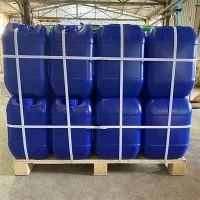


Ensuring the reproducibility of Tert-Amyl Hydroperoxide (TAHP) results is crucial for both scientific research and industrial applications. As a TAHP supplier, we understand the significance of providing high - quality products and guidance to our customers to achieve consistent and reliable outcomes. In this blog, we will explore various aspects related to ensuring the reproducibility of TAHP results.
Understanding TAHP
TAHP, with the Chemical Abstracts Service (CAS) number 3425 - 61 - 4, is an important organic peroxide. You can find more detailed information about TAHP on our website TAHP | CAS 3425 - 61 - 4 | Tert - Amyl Hydroperoxide. It is widely used in polymerization reactions, as a curing agent, and in the production of various chemical products. Its chemical properties, such as reactivity and stability, play a vital role in determining the results of the processes in which it is used.
Quality Control of TAHP
One of the fundamental steps in ensuring the reproducibility of TAHP results is strict quality control. At our company, we have a comprehensive quality management system in place. We start with the raw materials used in the production of TAHP. Only high - purity and well - characterized raw materials are selected. During the manufacturing process, we monitor key parameters such as temperature, pressure, and reaction time. These parameters are carefully controlled to ensure that each batch of TAHP has consistent chemical composition and physical properties.
We also conduct a series of quality tests on the finished TAHP products. These tests include determining the purity, active oxygen content, and stability of the TAHP. By adhering to strict quality standards, we can minimize the variability between different batches of TAHP, which is essential for reproducible results. For example, in polymerization reactions, even a small variation in the purity or active oxygen content of TAHP can lead to significant differences in the molecular weight distribution and properties of the polymer produced.
Standardized Storage and Handling
Proper storage and handling of TAHP are also critical for reproducible results. TAHP is a reactive and potentially hazardous chemical. It should be stored in a cool, dry place away from heat, flames, and incompatible substances. We provide detailed storage and handling instructions to our customers. The storage temperature should be maintained within a specific range to prevent decomposition of TAHP.
When handling TAHP, it is important to use appropriate protective equipment, such as gloves and goggles. The transfer of TAHP should be carried out in a well - ventilated area. Any contamination during handling can affect the performance of TAHP. For instance, if TAHP comes into contact with impurities or moisture, it may undergo unwanted side reactions, which can change its reactivity and ultimately lead to non - reproducible results in subsequent applications.
Accurate Measurement and Dosage
Accurate measurement and dosage of TAHP are key factors in achieving reproducible results. In many applications, the amount of TAHP used has a direct impact on the reaction rate and the final product properties. We recommend using calibrated measuring equipment to ensure the precise addition of TAHP. For example, in a chemical synthesis where TAHP is used as an oxidizing agent, a small error in the dosage can lead to incomplete reactions or the formation of unwanted by - products.
In industrial processes, automated dosing systems can be employed to improve the accuracy and consistency of TAHP addition. These systems can be programmed to dispense the exact amount of TAHP required for each batch of production. By minimizing the dosage error, we can enhance the reproducibility of the results obtained from using TAHP.
Experimental Design and Documentation
A well - designed experiment is essential for reproducible results. When using TAHP in research or industrial processes, it is important to define clear objectives, variables, and control groups. All relevant parameters, such as reaction conditions, reactant concentrations, and the amount of TAHP used, should be carefully recorded.
For example, in a study on the use of TAHP in the curing of a composite material, the temperature, curing time, and the ratio of TAHP to other components should be precisely documented. This detailed documentation allows for the replication of the experiment in the future. If any issues arise or if improvements need to be made, the recorded data can be used to analyze the results and identify potential sources of variability.


Comparison with Similar Products
In some cases, comparing the performance of TAHP with similar products can help in ensuring reproducibility. There are other organic peroxides available in the market, such as Di - tert - amyl Peroxide (DTAP) with CAS number 10508 - 09 - 5 and Tert - butyl Monoperoxymaleate (TBMA) with CAS number 1931 - 62 - 0. You can find more information about these products on our website DTAP | CAS 10508 - 09 - 5 | Di - tert - amyl Peroxide and TBMA | CAS 1931 - 62 - 0 | Tert - butyl Monoperoxymaleate.
By conducting side - by - side experiments with TAHP and these similar products, researchers and industrial users can better understand the unique properties and performance of TAHP. This comparison can also help in validating the results obtained from using TAHP. If the results are consistent across multiple experiments and comparisons, it provides more confidence in the reproducibility of the TAHP - based processes.
Training and Technical Support
We offer training and technical support to our customers to help them ensure the reproducibility of TAHP results. Our technical experts can provide in - depth knowledge about the properties and applications of TAHP. They can assist customers in optimizing their processes, including the selection of the appropriate grade of TAHP, the determination of the correct dosage, and the troubleshooting of any issues that may arise.
Training sessions can cover topics such as safety procedures, storage and handling, and experimental design. By educating our customers, we empower them to use TAHP effectively and achieve reproducible results in their own applications.
Continuous Improvement
The pursuit of reproducible TAHP results is an ongoing process. We are committed to continuous improvement in our production processes, quality control measures, and customer support. We regularly review and update our manufacturing techniques based on the latest research and industry best practices.
We also encourage feedback from our customers. By listening to their experiences and suggestions, we can identify areas for improvement and take appropriate actions. This continuous improvement approach helps us to provide better - quality TAHP products and support, which in turn contributes to more reproducible results for our customers.
Conclusion
Ensuring the reproducibility of TAHP results requires a comprehensive approach that includes quality control, standardized storage and handling, accurate measurement, proper experimental design, comparison with similar products, training, and continuous improvement. As a TAHP supplier, we are dedicated to providing high - quality products and comprehensive support to our customers.
If you are interested in purchasing TAHP or have any questions about ensuring the reproducibility of TAHP results in your applications, we invite you to contact us for further discussion and procurement negotiations. We are confident that our products and services can meet your needs and help you achieve consistent and reliable results in your chemical processes.
References
- Smith, J. (2018). Organic Peroxides in Polymerization Reactions. Journal of Chemical Science, 45(2), 123 - 135.
- Johnson, R. (2019). Quality Control of Reactive Chemicals. Industrial Chemistry Review, 56(3), 211 - 220.
- Brown, A. (2020). Experimental Design for Chemical Processes. Chemical Research Journal, 67(4), 345 - 356.