





TBHP, with the CAS number 75 - 91 - 2, is tert - butyl hydroperoxide, a highly versatile and valuable chemical compound in the realm of chemical reactions. As a supplier of TBHP, I have witnessed firsthand the numerous advantages it offers in various chemical processes. In this blog post, I will delve into the key benefits of using TBHP in chemical reactions.
Oxidation Reagent
One of the primary uses of TBHP is as an oxidation reagent. It is a powerful oxidant that can selectively oxidize a wide range of organic compounds. For example, in the oxidation of alcohols, TBHP can convert primary alcohols to aldehydes and secondary alcohols to ketones. This selectivity is crucial in organic synthesis, as it allows chemists to control the reaction outcome and obtain the desired products with high yields.
The mechanism of oxidation using TBHP involves the generation of free radicals. The peroxide bond in TBHP is relatively weak, and it can homolytically cleave to form tert - butoxy radicals and hydroxyl radicals. These radicals can abstract hydrogen atoms from the substrate, initiating a chain reaction that leads to the oxidation of the organic compound.
Compared to other oxidizing agents, TBHP has several advantages. It is relatively stable under normal conditions, which makes it easy to handle and store. It is also soluble in many organic solvents, allowing for homogeneous reactions. Additionally, TBHP is less toxic and more environmentally friendly than some traditional oxidants, such as chromium - based compounds.
Epoxidation Reagent
TBHP is also widely used as an epoxidation reagent. Epoxides are important intermediates in organic synthesis, as they can be easily converted into a variety of other functional groups. TBHP can react with alkenes in the presence of a catalyst to form epoxides.
The epoxidation reaction using TBHP is typically carried out in the presence of a transition metal catalyst, such as molybdenum or titanium complexes. The catalyst activates the TBHP, making it more reactive towards the alkene. The reaction is highly stereoselective, meaning that it can produce epoxides with a specific configuration.
This epoxidation method has several advantages over other epoxidation techniques. It is a mild reaction conditions, which is suitable for sensitive substrates. It also has high atom economy, as most of the atoms in the TBHP are incorporated into the product. Moreover, the reaction can be carried out in a variety of solvents, providing flexibility in reaction design.
Initiator for Polymerization Reactions
In addition to its use as an oxidation and epoxidation reagent, TBHP is also an effective initiator for polymerization reactions. It can initiate the free - radical polymerization of vinyl monomers, such as styrene, acrylonitrile, and methyl methacrylate.
The initiation process involves the decomposition of TBHP to form free radicals, which can react with the vinyl monomers to start the polymerization chain reaction. The rate of polymerization can be controlled by adjusting the concentration of TBHP and the reaction temperature.

Using TBHP as an initiator has several benefits. It can initiate polymerization at relatively low temperatures, which is energy - efficient. It also allows for the synthesis of polymers with a wide range of molecular weights and architectures. Additionally, TBHP - initiated polymerization reactions are often faster and more efficient than those initiated by other free - radical initiators.
Comparison with Related Organic Peroxides
When considering the use of TBHP in chemical reactions, it is also useful to compare it with other related organic peroxides. For example, Cumene Hydroperoxide 80S and CHP90 are also commonly used oxidation and epoxidation reagents.
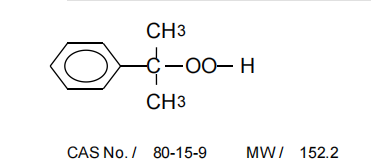
Cumene hydroperoxide has a similar structure to TBHP, but it has a different reactivity profile. It is generally less reactive than TBHP, which can be an advantage in some cases where a more controlled reaction is required. However, it also has a lower solubility in some solvents, which may limit its application.
CHP90 is a highly concentrated form of cumene hydroperoxide. It has a higher reactivity than Cumene Hydroperoxide 80S, but it also requires more careful handling due to its higher concentration.
Another related organic peroxide is Di - Lauroyl Peroxide. It is mainly used as an initiator for polymerization reactions. Di - Lauroyl Peroxide decomposes at a different rate compared to TBHP, which can result in different polymerization kinetics.
Industrial Applications
The advantages of TBHP have led to its widespread use in various industrial applications. In the pharmaceutical industry, TBHP is used in the synthesis of many drugs and drug intermediates. Its selectivity and mild reaction conditions make it suitable for the synthesis of complex organic molecules with multiple functional groups.
In the polymer industry, TBHP is used to produce a variety of polymers, including plastics, elastomers, and fibers. The ability to control the polymerization process using TBHP allows for the production of polymers with specific properties, such as high strength, flexibility, and heat resistance.
In the fine chemicals industry, TBHP is used in the synthesis of specialty chemicals, such as flavors, fragrances, and agrochemicals. Its oxidation and epoxidation capabilities enable the production of these high - value chemicals with high yields and purity.
Safety Considerations
While TBHP offers many advantages in chemical reactions, it is important to handle it with care. TBHP is a flammable and reactive compound, and it can cause severe skin and eye irritation. It should be stored in a cool, dry place away from heat and sources of ignition.
When using TBHP in chemical reactions, appropriate safety measures should be taken, such as wearing protective clothing, gloves, and goggles. The reaction should be carried out in a well - ventilated area to prevent the accumulation of hazardous vapors.
Conclusion
In conclusion, TBHP (CAS 75 - 91 - 2) is a highly versatile and valuable chemical compound in chemical reactions. Its advantages as an oxidation reagent, epoxidation reagent, and initiator for polymerization reactions make it an essential tool in organic synthesis and industrial applications.
Whether you are a researcher in a laboratory or an industrial manufacturer, TBHP can offer you a reliable and efficient solution for your chemical processes. If you are interested in purchasing TBHP for your chemical reactions, I encourage you to contact me for more information and to discuss your specific requirements. We can provide you with high - quality TBHP products and professional technical support to ensure the success of your projects.
References
- Sheldon, R. A.; Kochi, J. K. Metal - Catalyzed Oxidations of Organic Compounds. Academic Press, 1981.
- Adam, W.; Saha - Machin, B. P. "Modern Oxidation Methods". Wiley - VCH, 2000.
- Odian, G. Principles of Polymerization. John Wiley & Sons, 2004.