


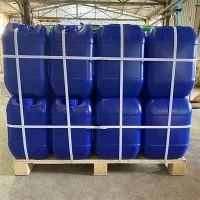


Hey there! As a supplier of TBHP (tert-butyl hydroperoxide), I often get asked if TBHP can be used as an initiator in polymerization. So, let's dive right into this topic and explore the ins and outs of using TBHP in polymerization processes.
What is TBHP?
First things first, let's talk a bit about TBHP. It's an organic peroxide with the chemical formula (CH₃)₃COOH. TBHP is a colorless liquid at room temperature and is soluble in many organic solvents. It's widely used in various industrial applications due to its unique chemical properties.
The Role of Initiators in Polymerization
Before we discuss whether TBHP can be an initiator, let's quickly go over what an initiator does in polymerization. Polymerization is the process of combining small molecules (monomers) into large molecules (polymers). Initiators are substances that start this reaction by generating free radicals. These free radicals react with monomers, causing them to link together and form polymers.
Can TBHP be Used as an Initiator in Polymerization?
The short answer is yes! TBHP can definitely be used as an initiator in polymerization. Here's why:
Free Radical Generation
TBHP is a source of free radicals. When heated or in the presence of certain catalysts, TBHP decomposes to form tert-butoxy radicals and hydroxyl radicals. These radicals can react with monomers, initiating the polymerization process. For example, in the polymerization of vinyl monomers like styrene or acrylate, TBHP can generate free radicals that react with the double bonds in the monomers, starting the chain reaction.
Versatility
TBHP can be used in different types of polymerization reactions, including solution polymerization, emulsion polymerization, and suspension polymerization. This versatility makes it a popular choice for many polymer manufacturers. In solution polymerization, TBHP can dissolve in the reaction solvent along with the monomers, facilitating the initiation of the reaction. In emulsion polymerization, it can help stabilize the emulsion and initiate the polymerization of monomers in the dispersed phase.
Control of Polymerization
One of the advantages of using TBHP as an initiator is that the rate of polymerization can be controlled. By adjusting the temperature, the concentration of TBHP, and the presence of other additives, manufacturers can control the molecular weight and the structure of the resulting polymers. This is crucial for producing polymers with specific properties for different applications.


Examples of Polymerization with TBHP
Let's take a look at some real - world examples of using TBHP in polymerization.
Polyacrylate Production
In the production of polyacrylates, which are used in adhesives, coatings, and textiles, TBHP can be used as an initiator. The tert - butoxy radicals generated from TBHP react with acrylate monomers, leading to the formation of polyacrylate chains. The resulting polyacrylates have good adhesion properties and can be tailored to different applications by controlling the polymerization conditions.
Styrene Polymerization
Styrene is another monomer that can be polymerized using TBHP as an initiator. Polystyrene is widely used in packaging, insulation, and consumer products. TBHP helps initiate the polymerization of styrene monomers, resulting in the formation of long - chain polystyrene molecules.
Comparison with Other Initiators
While TBHP is a great initiator, it's also important to compare it with other common initiators.
Di - Tert - Butyl Peroxide
Di - Tert - Butyl Peroxide is another organic peroxide used as an initiator. Compared to TBHP, Di - Tert - Butyl Peroxide has a higher decomposition temperature. This means that it can be used in high - temperature polymerization processes where TBHP might decompose too quickly. However, TBHP is more reactive at lower temperatures, making it suitable for applications where lower reaction temperatures are required.
Tert - butyl Monoperoxymaleate (TBMA)
TBMA | CAS 1931 - 62 - 0 | Tert - butyl Monoperoxymaleate is also an initiator. TBMA has a different chemical structure compared to TBHP, which gives it different reactivity and selectivity. TBMA can be used in specific polymerization reactions where its unique properties are advantageous. For example, it might be more suitable for copolymerization reactions where specific monomer sequences are desired.
1,1 - Di(tert - butylperoxy)cyclohexane (CH)
CH | CAS 3006 - 86 - 8 | 1,1 - Di(tert - butylperoxy)cyclohexane is yet another initiator. It has a relatively high decomposition temperature and can be used in polymerization reactions that require high - energy input. TBHP, on the other hand, can be used in more mild reaction conditions.
Safety Considerations
When using TBHP as an initiator, safety is of utmost importance. TBHP is a flammable and reactive substance. It should be stored and handled properly to prevent accidents. It's important to follow safety guidelines, such as wearing appropriate protective equipment, storing TBHP in a cool and dry place, and avoiding contact with incompatible substances.
Conclusion
In conclusion, TBHP can be effectively used as an initiator in polymerization. Its ability to generate free radicals, versatility in different polymerization processes, and controllability make it a valuable choice for polymer manufacturers. However, like any chemical, it needs to be used with caution.
If you're in the polymer manufacturing industry and are considering using TBHP as an initiator, or if you have any questions about our TBHP products, feel free to reach out to us for more information and to discuss your specific requirements. We're here to help you find the best solutions for your polymerization needs.
References
- Odian, G. Principles of Polymerization. Wiley, 2004.
- Polymer Science Dictionary. Chapman & Hall, 1990.