


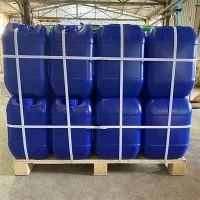


Hey there! As a supplier of Poly-Putty Base, I get asked a ton about the curing time. In this blog, I'm gonna break it down, sharing how understanding the curing time of Poly-Putty Base can supercharge your project's success.
Let's start by leveling up on the science behind the cure. Poly-Putty Base is a wonder combo of resin and filler. The magic happens when you mix in a catalyst, which kickstarts a chemical reaction known as polymerization. That’s when those molecules start linking up, turning the putty from a sticky mess into a solid powerhouse.


There's no one-size-fits-all answer when it comes to the curing time. It depends on a mix of factors, and I'll dig into each one.
The catalyst is like the conductor of an orchestra. The type and amount you use can really change how fast the putty cures. For a quicker setup, you might want to explore options like DCLBP | CAS 133-14-2 | Di(2,4-chlorobenzoyl) Peroxide. But remember, it's always a balancing act. Use too much catalyst, and the curing can speed out of control, causing cracks or uneven surfaces. Dial it back too much, and you'll be waiting ages for the putty to set.
Heat is another big player. It's like a turbo boost for the curing process. Warmer temperatures get the chemical reactions revving up, making the putty harden faster. On the flip side, if it's cold, the curing can slow to a crawl. That's why you'll often find that curing times are longer in the winter months. A rule of thumb is that for every 10°C increase in temperature, the curing time can roughly halve. But if it gets too hot, you could run into issues like the putty drying out or developing bubbles.
Now, let's talk about the putty layer. Think of it as a pizza. A thin layer will cook faster than a thick one. The same goes for Poly-Putty Base. A thin smear will cure in a jiffy compared to a thick glob. If you're piling on the putty, it might take a lot longer for the inner layers to fully set.
The environment also has a say. Humidity can slow down the curing, especially in some types of Poly-Putty Base. And if there's poor ventilation, it can trap heat and moisture, leading to uneven curing.
Working out the perfect curing time is like a puzzle. You gotta test the conditions on a small spot first. Mix up a bit of the putty with your chosen catalyst, apply it, and keep an eye on how long it takes to set. This way, you can make any needed tweaks before you start the big job.
Imagine you're working on a large-scale metal sculpture project. You need the putty to be strong and set quickly so you can move on to the next part. With a bit of testing, you find that using DHBP | CAS 78-63-7 | 2,5-Dimethyl-2,5-di(tert-butylperoxy)hexane as a catalyst, and applying a thin layer of putty in a warm, well-ventilated area, will give you the best results.
Similarly, for a DIY furniture restoration, you might prefer a curing process that gives you more time to work. You could use a different catalyst like DTAP | CAS 10508-09-5 | Di-tert-amyl Peroxide and work in a cooler environment to slow down the setting time.
Over the years, our customers have shared many success stories. One customer was using our Poly-Putty Base to repair some old woodwork. By carefully controlling the temperature and using the right catalyst, they were able to create a smooth finish that was as good as new. Another used it in a marine application, where the curing time needed to be just right to withstand the harsh conditions. They experimented with different catalysts and application techniques until they found the perfect solution.
Now, here's the juicy part. Our Poly-Putty Base comes with some pretty awesome benefits. First off, it gives you flexibility. You can play around with different catalysts and conditions to get the curing time that suits your project to a T. Whether you're in a hurry or need more time to work, we've got you covered.
And then there's the quality. We've spent a ton of time perfecting our formula. The result? A putty that cures evenly, giving you a strong, long-lasting finish. You won't have to worry about cracks or splitting down the line.
If you're itching to learn more or are ready to start making magic with our Poly-Putty Base, don't hesitate! Head over to our website or drop us a message. We’ve got a team of experts standing by to answer any questions you might have, help you figure out the best catalyst and curing conditions for your project, and guide you through the whole process. Whether you're a seasoned pro or just starting out in the world of DIY, we're here to support you every step of the way. Let's create something amazing together!
References
- Various industry research papers on resin polymerization.
- Customer feedback and case studies.
- Manufacturer's data sheets for different catalysts and Poly - Putty Base products.