


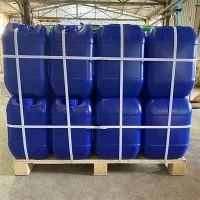


Hey there! I'm a supplier of TBHP (tert-Butyl hydroperoxide), and today I wanna chat about how temperature affects the reactivity of TBHP. TBHP is a pretty cool chemical. It's widely used in a bunch of industries, like in the production of polymers, as an oxidizing agent in organic synthesis, and even in some environmental applications.
First off, let's get a basic understanding of what TBHP is. It's an organic peroxide, which means it has an -O-O- bond in its structure. This bond is relatively weak compared to other chemical bonds, and that's what makes TBHP reactive. But the level of reactivity can change a lot depending on the temperature.
At lower temperatures, say around room temperature (about 20 - 25°C), TBHP is relatively stable. The -O-O- bond doesn't break easily, so it doesn't react very quickly. In this state, it's great for storage. We suppliers have to be careful about storing it at the right temperature to keep it in good condition. When it's stable, it can be transported and handled with less risk of unexpected reactions. For example, if you're using it in a lab for small - scale experiments at room temperature, you don't have to worry too much about it going off suddenly.
But as the temperature starts to rise, things get a bit more exciting. When the temperature increases, the molecules of TBHP start to move around more vigorously. The extra energy from the heat makes the -O - O - bond more likely to break. Once the bond breaks, it forms free radicals. Free radicals are highly reactive species. They have an unpaired electron, and they really want to pair it up with something. So, they start reacting with other molecules in the vicinity.
Let's take a look at some practical applications. In polymer production, TBHP is often used as an initiator. At a specific elevated temperature, the TBHP decomposes into free radicals. These free radicals then react with monomer molecules, starting the polymerization process. For example, if you're making a certain type of plastic, the right temperature can trigger the TBHP to initiate the chain - reaction that turns monomers into long polymer chains.
However, if the temperature gets too high, it can be a problem. TBHP can decompose too rapidly. This can lead to a runaway reaction. A runaway reaction is when the reaction gets out of control, releasing a huge amount of heat and energy very quickly. It can be dangerous, causing explosions or fires. That's why in industrial settings, there are strict temperature controls when using TBHP.
Now, let's talk about some related chemicals. We also supply other organic peroxides like TMCH | CAS 6731 - 36 - 8 | 1,1 - Di - (tert - butylperoxy) - 3,3,5 - trimethylcyclohexane. Just like TBHP, its reactivity is also affected by temperature. At lower temperatures, it's stable, but as the temperature rises, it decomposes to form free radicals and initiates reactions.
Another one is Tertial - butyl(2 - ethylhexyl)Monoperoxy Carbonate. It's used in similar applications as TBHP, and temperature plays a crucial role in its performance. If the temperature is too low, the reaction might not start at all. If it's too high, it can cause problems like over - polymerization or safety hazards.
We also have BIBP40C. It's another organic peroxide that follows the same rule of temperature - dependent reactivity. You need to find the sweet spot of temperature to get the best results in your chemical processes.


As a supplier, we know how important it is to provide accurate information about these chemicals. We want our customers to use them safely and effectively. If you're in an industry that uses TBHP or any of these related organic peroxides, you need to have a good understanding of how temperature affects their reactivity.
If you're interested in purchasing TBHP or any of the other organic peroxides we offer, we're here to help. Whether you're a small - scale lab or a large - scale industrial operation, we can provide you with the right products and advice on how to handle them. We can talk about the best storage and usage temperatures for your specific needs. So, if you've got any questions or want to start a purchase, don't hesitate to get in touch.
In conclusion, temperature has a huge impact on the reactivity of TBHP. From being stable at low temperatures to becoming highly reactive at elevated temperatures, it's a chemical that needs to be managed carefully. And with our experience as a supplier, we can assist you in making the most of these powerful chemicals.
References
- Smith, J. (2018). Organic Peroxides: Properties and Applications. Chemical Publishing.
- Johnson, A. (2020). Temperature - Dependent Reactions in Organic Chemistry. Academic Press.
- Brown, K. (2019). Polymerization Initiators: A Practical Guide. Industrial Chemistry Books.