


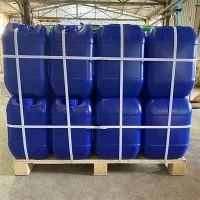


As a reliable supplier of the substance with CAS 25155 - 25 - 3, I am delighted to share in - depth knowledge about its substitution reactions. CAS 25155 - 25 - 3 refers to 2,2 - Bis(tert - butylperoxy)butane, which is an important organic peroxide. Organic peroxides are well - known for their high reactivity due to the presence of the peroxide bond (-O - O -), and 2,2 - Bis(tert - butylperoxy)butane is no exception.
General Mechanism of Substitution Reactions
Substitution reactions involve the replacement of an atom or a group of atoms in a molecule with another atom or group. In the case of 2,2 - Bis(tert - butylperoxy)butane, the substitution reactions are often influenced by the nature of the peroxide groups and the butane backbone. The peroxide bonds are relatively weak and can undergo homolytic cleavage under appropriate conditions, generating free radicals. These free radicals can then participate in substitution reactions.
There are two main types of substitution reactions: nucleophilic substitution and electrophilic substitution. However, for 2,2 - Bis(tert - butylperoxy)butane, free - radical substitution reactions are more common because of the ease of generating free radicals from the peroxide bonds.
Free - Radical Substitution Reactions
Initiation
The first step in a free - radical substitution reaction is the initiation step. When 2,2 - Bis(tert - butylperoxy)butane is heated or exposed to certain initiators, the peroxide bonds break homolytically. Each oxygen - oxygen bond splits, and two tert - butylperoxy radicals are formed. This process can be represented by the following equation:
[ (CH_3)_3COOC(CH_3)_3C_4H_8 \longrightarrow 2(CH_3)_3CO^{\cdot}+C_4H_8 ]
Propagation
Once the free radicals are generated, they can react with other molecules in the system. For example, if there is an alkane present in the reaction mixture, the tert - butylperoxy radical can abstract a hydrogen atom from the alkane. This forms a new alkyl radical and tert - butyl hydroperoxide.
[ (CH_3)_3CO^{\cdot}+RH\longrightarrow (CH_3)_3COH + R^{\cdot} ]
The newly formed alkyl radical can then react with another molecule of 2,2 - Bis(tert - butylperoxy)butane. It can substitute one of the tert - butylperoxy groups on the butane backbone.
[ R^{\cdot}+(CH_3)_3COOC(CH_3)_3C_4H_8\longrightarrow R - OC(CH_3)_3C_4H_8+(CH_3)_3CO^{\cdot} ]
This cycle of reactions can continue, propagating the free - radical chain reaction.
Termination
The free - radical substitution reaction comes to an end when two free radicals react with each other. For example, two alkyl radicals can combine to form a new, stable molecule.
[ 2R^{\cdot}\longrightarrow R - R ]
Alternatively, a tert - butylperoxy radical and an alkyl radical can react to form a stable ether or ester - like product, depending on the nature of the radicals.
Influence of Reaction Conditions
The substitution reactions of 2,2 - Bis(tert - butylperoxy)butane are highly dependent on reaction conditions. Temperature plays a crucial role. Higher temperatures facilitate the homolytic cleavage of the peroxide bonds, increasing the rate of initiation of the free - radical substitution reaction. However, extremely high temperatures can also lead to side reactions and decomposition of the products.
The presence of solvents can also affect the reaction. Polar solvents may solvate the free radicals and influence their reactivity. For example, solvents with high dielectric constants can stabilize charged intermediates, which may affect the rate and selectivity of the substitution reactions.
Comparison with Other Organic Peroxides
To better understand the substitution reactions of 2,2 - Bis(tert - butylperoxy)butane, it is useful to compare it with other common organic peroxides. For instance, CH | CAS 3006 - 86 - 8 | 1,1 - Di(tert - butylperoxy)cyclohexane has a cyclohexane backbone instead of a butane backbone. The cyclic structure can affect the steric hindrance and the stability of the free radicals formed during substitution reactions.


BPO | CAS 94 - 36 - 0 | Dibenzoyl Peroxide contains benzoyl groups. The aromatic nature of the benzoyl groups can lead to different reaction pathways compared to the aliphatic 2,2 - Bis(tert - butylperoxy)butane. The resonance stabilization of the benzoyl radicals can influence the rate and selectivity of substitution reactions.
TBPIN | CAS 13122 - 18 - 4 | Tert - butylperoxy - 3,5,5 - trimethylhexanoate has an ester group in its structure. The ester functionality can participate in additional reactions during substitution processes, such as hydrolysis or trans - esterification, which are not typically observed with 2,2 - Bis(tert - butylperoxy)butane.
Applications of Substitution Reactions of 2,2 - Bis(tert - butylperoxy)butane
The substitution reactions of 2,2 - Bis(tert - butylperoxy)butane have several practical applications. In the polymer industry, it can be used as an initiator for free - radical polymerization. The substitution reactions are involved in the chain - growth process of polymers. By controlling the substitution reactions, the molecular weight and structure of the polymers can be tailored.
In organic synthesis, the substitution reactions can be used to introduce new functional groups into molecules. For example, by reacting 2,2 - Bis(tert - butylperoxy)butane with appropriate substrates, new alkyl - substituted compounds can be synthesized.
Safety Considerations
When dealing with 2,2 - Bis(tert - butylperoxy)butane and its substitution reactions, safety is of utmost importance. Organic peroxides are highly reactive and can be explosive under certain conditions. They should be stored and handled with care, following strict safety protocols. Appropriate protective equipment, such as gloves and goggles, should be worn during the experiments.
Contact for Procurement
If you are interested in purchasing 2,2 - Bis(tert - butylperoxy)butane (CAS 25155 - 25 - 3) for your research, industrial applications, or other needs, please feel free to contact us. We are committed to providing high - quality products and excellent customer service. Our team of experts can also offer technical support and guidance on the use of this substance in substitution reactions and other chemical processes.
References
- March, J. "Advanced Organic Chemistry: Reactions, Mechanisms, and Structure". Wiley, 2007.
- Carey, F. A., & Sundberg, R. J. "Advanced Organic Chemistry Part A: Structure and Mechanisms". Springer, 2007.
- Kharasch, M. S., & Mayo, F. R. "The Chemistry of Organic Peroxides". Reinhold Publishing Corporation, 1954.