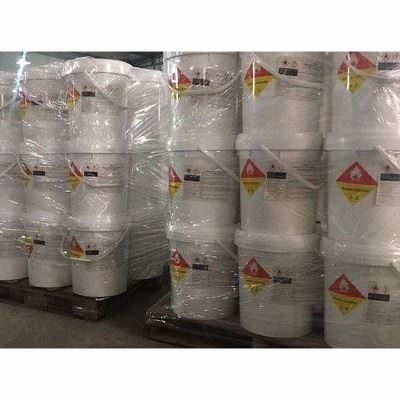
Di-n-Propyl Peroxydicarbonate is a dialkyl peroxydicarbonate organic peroxide used as a thermal initiator in free-radical polymerization. It is identified by CAS No. 16066-38-9, molecular formula C₈H₁₄O₆ and molecular weight of 206.19 g/mol.
Its relatively low decomposition range makes half-life, active oxygen and temperature control key parameters for process selection.
Product Identification
|
Parameter |
Value |
|
Chemical Name |
Di-n-Propyl Peroxydicarbonate |
|
CAS No. |
16066-38-9 |
|
Molecular Formula |
C₈H₁₄O₆ |
|
Molecular Weight |
206.19 g/mol |
|
Product Type |
Dialkyl Peroxydicarbonate |
|
Physical Form |
Liquid |
Key Technical Parameters
|
Parameter |
Value |
|
10 h Half-Life Temperature |
50 °C |
|
1 h Half-Life Temperature |
66 °C |
|
Active Oxygen |
≥7.68% |
|
Assay |
≥99% |
|
SADT |
Approx. -7 °C |
|
Maximum Storage Temperature |
Approx. -23 °C |
Selection Criteria
Half-Life
The 10-hour and 1-hour half-life temperatures indicate the temperature-dependent decomposition rate and help match initiator activity with the reaction profile.
Active Oxygen
Active oxygen provides a quantitative reference for peroxide content and supports dosage calculations based on the required initiation level.
Temperature Range
The decomposition range should be considered together with reaction temperature and residence time when selecting the initiator.
Polymerization Applications
Vinyl Chloride
Di-n-Propyl Peroxydicarbonate is used as a free-radical initiator in vinyl chloride polymerization systems.
Suspension Polymerization
Its decomposition profile can be matched with suspension polymerization processes requiring controlled initiator activity during the reaction cycle.
Radical Initiation
The product is suitable for processes requiring a defined thermal initiation profile within the applicable operating range.
Process Matching
Reaction Temperature
The actual polymerization temperature is a primary reference for assessing initiator decomposition behavior.
Residence Time
Reaction time should be evaluated with half-life data to determine how the initiator contributes to radical generation during the process.
Dosage
Dosage depends on polymer formulation, reaction conditions, target conversion and active peroxide concentration.
Product Handling
Temperature Control
Product temperature should remain within the limits specified in the applicable technical and safety documentation during handling.
Material Compatibility
Handling procedures should control contact with incompatible materials and follow the specified safety requirements.
Heat Exposure
Transfer and processing should limit unnecessary heat exposure and maintain the required temperature range.
Storage Requirements
Storage Temperature
Controlled low-temperature storage is required. The applicable temperature limit should be confirmed for the specific product specification.
Temperature Monitoring
Storage temperature should be monitored throughout the storage period to maintain the specified condition.
Stock Management
Inventory levels should be coordinated with shelf life, storage conditions and planned production requirements.
Quality Control
Identity
Chemical name, CAS number, molecular formula and physical form provide the basic identity checks for incoming material.
Peroxide Content
Active oxygen and assay values provide quantitative references for batch evaluation and process dosage calculations.
Thermal Properties
Half-life data provide process-related references for evaluating decomposition behavior at defined temperatures.
Documentation
Technical Data Sheet
The TDS should define product identity, analytical values, specification limits and applicable handling conditions.
Safety Data Sheet
The current SDS should be reviewed before storage, transportation and process use.
Batch Records
Batch-specific quality records support incoming inspection, production control and material traceability.
Packaging & Shipment
Packaging Format
Packaging should be suitable for temperature-sensitive organic peroxide products and comply with applicable transport requirements.
Temperature Control
Shipment conditions should maintain the temperature range specified for the product throughout transportation.
Shipping Documents
Destination requirements, packaging configuration, temperature conditions and required transport documents should be confirmed before dispatch.
FAQ
Q: What is Di-n-Propyl Peroxydicarbonate used for?
A: It is used as a thermal free-radical initiator in polymerization processes, including vinyl chloride polymerization systems.
Q: What is the CAS number?
A: The CAS number is 16066-38-9.
Q: Which parameters are important for product selection?
A: Key parameters include half-life temperature, active oxygen, assay, thermal profile and storage temperature.
Q: What process information is needed for technical evaluation?
A: Reaction temperature, residence time, polymerization method, initiator dosage and target conversion provide the main references for process matching.
Q: Does the product require controlled-temperature storage?
A: Yes. The applicable storage temperature should be maintained according to the current product specification and safety documentation.
Q: Which documents should be reviewed before order confirmation?
A: The applicable TDS, SDS, product specification and batch quality documentation should be reviewed before confirming product and shipment requirements.
Hot Tags: di-n-propyl peroxydicarbonate, China di-n-propyl peroxydicarbonate manufacturers, suppliers, factory