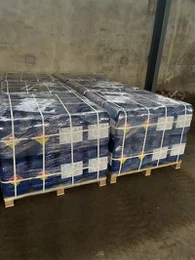
Nantong Kezhong Chemical Technology Co., Ltd.:Your Trustworthy Tert-Butyl Peroxybenzoate Manufacturer!
Nantong Kezhong Chemical Technology Co., Ltd. is a professional supplier of organic peroxides, acyl chloride series and basic chemicals.The company has self import and export qualification, and is committed to providing competitive products and perfect solutions for users at home and abroad. The products sell well in Chinese Mainland, Chinese Taiwan, Europe, America, India and other countries and regions.
Leading Service
We are committed to constantly innovating our products to provide foreign customers with a large number of high-quality products to exceed customer satisfaction. We can also provide customized services according to customers' requirements such as size,color,appearance,etc.We can provide the most favorable price and high-quality products.
Quality Guaranteed
We have been continuously researching and innovating to meet the needs of different customers. At the same time, we always adhere to strict quality control to ensure that the quality of every product meets international standards.
Wide Sales Countries
We focus on sales in overseas markets. Our products are exported to Europe, America,Southeast Asia,the Middle East and other regions, and are well received by customers around the world.
Various Types of Products
Our products include Organic peroxides: Tert-butyl peroxybenzoate , dibenzoyl peroxide, di-tert-butyl peroxide, tert-butyl hydrogen peroxide, 2,5-dimethyl-2,5-bis (tert-butylperoxy) hexane, and bis (2,4-dichlorobenzoyl peroxide), totaling 5000 tons/year. Acyl chloride series and basic chemicals: acryloyl chloride, methacryloyl chloride, p-chlorobenzoyl chloride, benzophenone (refined grade), oxalyl chloride, benzoyl chloride, etc., totaling 15000 tons/year.
Our Related Products

Oxalyl chloride is a diacyl chloride derived from oxalic acid. It is a colorless fuming liquid with pungent smell, which can be prepared by the reaction of oxalic acid and Phosphorus pentachloride. It can decompose violently when exposed to water and ethanol. It is corrosive and tear inducing.Its CAS number is 79-37-8. Oxalyl chloride is also known as Oxalyl dichlorideand Ethanedioyl dichloride.It is mainly used as a reagent for organic synthesis.

Acryloyl Chloride | CAS 814-68-6
Acryloyl chloride is a colorless flammable liquid with a corrosive and irritating odor.Its CAS number is 814-68-6.Acryloyl chloride is toxic, highly flammable and corrosive.It can cause burns, and is irritating to the eyes and respiratory system.

Methacryloyl Chloride | CAS 920-46-7
Methacryloyl chloride is a colorless, transparent, and clear liquid.Its CAS number is 920-46-7.
Methacryloyl chloride is also known as 2-Methyl-2-Propenoyl chloride.It is highly flammable.

DHBP | CAS 78-63-7 | 2,5-Dimethyl-2,5-Di(Tert-Butylperoxy)Hexane
2,5-Dimethyl-2,5-di(tert-butylperoxy)hexane is a dialkyl organic peroxide.It is a low volatility, slightly yellow clear liquid. Its CAS number is 78-63-7.It can be diluted with hexane, odorless mineral oil, isododecane, etc. It can also be diluted with inorganic compound or polypropylene powder.

BPO | CAS 94-36-0 | Dibenzoyl Peroxide
Dibenzoyl peroxide is a white granular,slightly bitter almond smell.Its CAS number is 94-36-0.It is a strong oxidizer,highly unstable and flammable.When impacted, heated or rubbed, it can explode.When sulfuric acid is added, combustion occurs.

TBPB | CAS 614-45-9 | Tert-Butyl Peroxybenzoate
Tert-butyl peroxybenzoate is an organic peroxide.Its CAS number is 614-45-9.It is a colorless to slightly yellow liquid and has a slight aromatic odor.It is insoluble in water and soluble in organic solvents.

BIBP | CAS 25155-25-3 | Bis(Tert-Butyldioxyisopropyl)Benzene
Bis(tert-butyldioxyisopropyl)benzene is white powder.Its CAS number is 25155-25-3.It belongs to the category of peroxide crosslinking agents, which undergo free radical crosslinking during the vulcanization process.

TBHP | CAS 75-91-2 | Tert-Butyl Hydroperoxide
Tert-butyl hydroperoxide is also known as TBHP.Its characteristics are good thermal stability, safe use, and easy to control. At temperatures below 50℃, its activity does not change significantly within three months, and there is no need for expensive frozen storage.

CH | CAS 3006-86-8 | 1,1-Di(Tert-Butylperoxy)Cyclohexane
1,1-Di(tert-butylperoxy)cyclohexane is also known as CH. It is used as an initiator for polymerization and copolymerization of ethylene, styrene, acrylonitrile, acrylate, and methacrylate.
TBPB, which is pale yellow, is exclusively encountered as a solution in solvents such as ethanol or phthalate. As peroxo compound, TBPB contains about 8.16 wt% of active oxygen and has a self accelerating decomposition temperature (SADT) of about 60 °C. The SADT is the lowest temperature at which self-accelerating decomposition in the transport packaging can occur within a week, and which should not be exceeded while storage or transportation. TBPB should therefore be stored between minimum 10 °C (below solidification) and maximum 50 °C. Dilution with a high-boiling solvent increases the SADT. The half-life of TBPB, in which 50% of the peroxy ester is decomposed, is 10 hours at 104 °C, one hour at 124 °C and one minute at 165 °C. Amines, metal ions, strong acids and bases, as well as strong reducing and oxidizing agents accelerate the decomposition of TBPB even in low concentrations. However, TBPB is one of the safest peresters or organic peroxides in handling. The main decomposition products of tert-butyl peroxybenzoate are carbon dioxide, acetone, methane, tert-butanol, benzoic acid and benzene.
What to Know About Tert-Butyl Peroxybenzoate
Uses
Tert-Butyl peroxybenzoate is used for elevated temperature curing of polyesters and to initiate polymerization reactions. It could used as a Polymerization initiator for polyethylene, polystyrene, polyacrylates, and polyesters. It is also used as a chemical intermediate.
Tert-Butyl peroxybenzoate was employed as polymerization and cross-linking catalyst. It was also was employed as initiator during ?grafting of 2,2,6,6-tetramethyl-1-piperidinyloxy (TEMPO)-4-oxyacetamido-(3 propyltriethoxysilane) to poly(ethylene co-octene and in preparation of conformal poly(cyclohexyl methacrylate) thin films via initiated chemical vapor deposition.
Reactivity Profile
TERT-BUTYL PEROXYBENZOATE explodes with great violence when rapidly heated to a critical temperature; pure form is shock sensitive and detonable [Bretherick 1979 p. 602]. Upon contact with organic matter, t-butyl peroxybenzoate can ignite or give rise to an explosion [Haz. Chem. Data 1973 p. 77].
Health Hazard
T-Butyl peroxybenzoate is a mild skin andeye irritant. Exposure to 500 mg/day causedmild irritation in rabbit eyes and skin. Toxicitydata on animals show a low order oftoxicity.
LD50 value, oral (mice): 914 mg/kg
It has been reported to cause tumors(blood) in mice. Its carcinogenic actions onhumans are unknown.
Fire Hazard
Highly reactive and oxidizing compound with moderate flammability; flash point (open cup) 107–110°C (224.6–230°F); autoignition temperature not reported. It forms an explosive mixture with air; the explosive range not reported. It is not sensitive to shock but is heat sensitive. It explodes on heating; self-accelerating decomposition temperature 60°C (140°F).
It may react explosively when mixed with readily oxidizable, organic, and flammable substances. Fire-extinguishing agent: water from a sprinkler; use water to keep the containers cool.
Safety Profile
Moderately toxic by ingestion. A skin and eye irritant. Questionable carcinogen with experimental tumorigenic data. Mutation data reported. See also PEROXIDES, ORGANIC. Potentially explosive when heated above 11 5'C. Explosive reaction on contact with organic matter or copperQ) bromide + limonene. When heated to decomposition it emits acrid smoke and fumes.
Carcinogenicity
Other studies have determined the possibility that t-butyl peroxybenzoate can be metabolized to free radicals by human carcinoma skin keratinocytes. Free radicals are suggested to be involved in the cascade of events occurring during tumor promotion .
Storage
It should be stored in a well-ventilatedplace at a temperature between 10 and27°C (50–80°F), isolated from oxidizable,flammable, organic materials and accelerators.It should be shipped in glass, polyethylene,and earthenware containers of up to5-gallon capacity placed inside wooden orfiberboard boxes.
Production Process Of TBPB
Acid Preparation: 71.4% by weight of 98% concentrated sulfuric acid; water 28.6 wt%.
Firstly, putting 98% concentrated sulfuric acid into a reaction kettle, then adding water under the cooling condition to ensure that the temperature is not higher than 80 ℃, and dripping for 60 minutes, wherein the speed is first high and then low, and the speed is determined according to the temperature. After the dropwise addition, the mixture was cooled to room temperature. 70 percent dilute sulfuric acid is obtained for standby.
Esterification: 30.6-35 wt% of tert-butyl alcohol; 70% dilute sulfuric acid 65-69.4 wt%.
Putting the tert-butyl alcohol into a reaction kettle, dripping 70% dilute sulfuric acid into the reaction kettle, pumping the frozen brine into an interlayer of the reaction kettle for circulating circulation of a circulating pump, and controlling the temperature of the frozen brine to be between 30 and 34 ℃. And (4) obtaining the esterified liquid for later use after the dripping is finished.
Synthesizing: 31.4 to 37.8 weight percent of 27.5 percent of hydrogen peroxide; 62.2 to 68.6 weight percent of esterification liquid.
Adding 27.5% hydrogen peroxide into the reaction kettle, adding the esterification solution dropwise, and controlling the temperature to be 34-38 deg.C with frozen saline water. Stirring for 30 minutes after the dropwise addition is finished, standing for 10 hours, and then removing lower layer diluted acid to obtain crude tert-butyl, namely crude tert-butyl hydroperoxide for later use. Esterification liquid hydrogen peroxide crude tert-butyl hydroperoxide di-tert-butyl hydroperoxide water
Preparing Sodium Salt: 25.8-26.8 wt% of 30% liquid alkali; coarse tertiary 20.7-23.7 wt%; 50.5-52.5 wt% of water.
Firstly, 30 percent of liquid caustic soda is put into a reaction kettle filled with water, the temperature of the reaction kettle is controlled by utilizing frozen saline water, all the crude caustic soda is dripped into the reaction kettle, and the temperature is controlled between 15 ℃ and 20 ℃. Stirring for 30 minutes after the dripping is finished, standing for 1 hour, wherein the lower layer is sodium salt, and the upper layer is a byproduct, namely water.
Crude tertiary liquid alkali sodium salt water
Condensation: 77.2-80 wt% of sodium salt; 20-22.8 wt% of benzoyl chloride.
Adding benzoyl chloride into a reaction kettle, cooling by using frozen saline, adding sodium salt dropwise at a temperature below 20 ℃, keeping the temperature for 1 hour at a temperature of between 15 and 20 ℃ after dropwise adding, standing for 1 hour, and then layering, wherein the upper layer is a crude product, and the lower layer is waste liquid.
Sodium salt benzoyl chloride crude sodium chloride
Washing And Drying: 14.6-15% by weight of 30% liquid alkali; 7880 wt.% water; 5-7.3 wt% of anhydrous sodium sulfate.
Respectively adding 30% liquid caustic soda and water into the reaction kettle, adding all the crude products, stirring for 20 minutes, and standing for 1 hour to remove lower-layer waste liquid. Washing with water for 2-3 times by the same method, removing upper layer wastewater, adding a certain amount of anhydrous sodium sulfate, stirring for 30 min, and vacuum filtering to obtain the final product.
Storage and Transportation
Tert-butyl peroxybenzoate is an important chemical raw material, which is widely used in the manufacturing process of polymer, plastic, rubber and other materials. However, due to its flammable, explosive, toxic and other characteristics, it is necessary to strictly abide by relevant safety regulations during storage and transportation to ensure the safety of personnel and the environment.

Safety Storage Specification Of Tert-Butyl Peroxybenzoate
The storage place should be dry, ventilated, cool, and away from open flames, heat sources and other dangerous sources.
Storage containers shall comply with relevant standards and have sufficient strength and sealing performance to prevent leakage and volatilization.
The storage area shall have obvious safety signs and warning signs, and smoking and open fire shall be prohibited.
During the storage process, regular safety inspection and monitoring shall be carried out to discover and deal with potential safety hazards in time.
Safety Transportation Specifications For Tert-Butyl Peroxybenzoate
Transport vehicles should meet relevant standards, have sufficient strength and sealing performance, and prevent leakage and volatilization.
During transportation, it should be kept stable to avoid severe vibration, collision, friction and other factors that may cause damage to the container.
Special personnel shall be assigned to escort the transportation during transportation to supervise transportation safety and deal with emergencies.
During transportation, the relevant road traffic safety regulations shall be observed to ensure safe and smooth driving.
In conclusion, tert-butyl peroxybenzoate is an important raw material for chemical production, and its safe storage and transportation are very important. Relevant units and individuals shall strictly abide by relevant safety regulations and take effective measures to ensure the safety of personnel and environment.
Emergency Treatment Measures
In case of leakage accident, should immediately cut off the leakage source, and use non-combustible dispersant scrub, after dilution into the waste water system.
In the event of a fire accident, fire extinguishing agents such as dry powder, foam and carbon dioxide should be used immediately to extinguish the fire, and call the police in time to seek professional fire rescue.
If personnel come into contact with the compound, they should immediately take off the contaminated clothing, rinse the contact area with flowing water, and seek medical treatment in time.
Applications of Tert-Butyl Peroxybenzoate
In Polymer Chemistry
Primarily, TBPB is used as a radical initiator, either in the polymerization of e.g. ethylene (to LDPE), vinyl chloride, styrene or acrylic esters or as so-called unsaturated polyester resins (UP resins). The quantity used for the curing of UP resins is about 1-2%. A disadvantage, particularly in the production of polymers for applications in the food or cosmetics sector, is the possible formation of benzene as a decomposition product which can diffuse out of the polymer (for example, an LDPE packaging film).
In Organic Chemistry
The protecting group 2-trimethylsilylethanesulfonyl chloride (SES-Cl) for primary and secondary amino groups is accessible by the reaction of vinyltrimethylsilane with sodium hydrogensulfite and TBPB to the sodium salt of trimethylsilylethanesulfonic acid and the subsequent reaction with thionyl chloride to the corresponding sulfonyl chloride.
Synthethis Of The Protecting Group SES-CL
TBPB can be used to introduce a benzoyloxy group in the allyl position of unsaturated hydrocarbons.
Synthesis Of 3-benzoyloxycyclohexene
From cyclohexene, 3-benzoyloxycyclohexene is formed with TBPB in the presence of catalytic amounts of copper(I)bromide in 71 to 80% yield. This allylic oxidation of alkenes, also known as Kharasch-Sosnovsky oxidation, generates racemic allylic benzoates in the presence of catalytic amounts of copper(I)bromide.
Kharasch-sosnovsky Reaction
A modification of the reaction utilizes copper(II) trifluoromethanesulfonate as a catalyst and DBN or DBU as bases to achieve yields up to 80% in the reaction of acyclic olefins with TBPB to allylic benzoates. Substituted oxazolines and thiazolines can be oxidized to the corresponding oxazoles and thiazoles in a modified Kharash-Sosnovsky oxidation with TBPB and a mixture of Cu(I) and Cu(II) salts in suitable yields.
FAQ
Hot Tags: tert-butyl peroxybenzoate, China tert-butyl peroxybenzoate manufacturers, suppliers, factory, CAS 13122 18 4, EPDM crosslinking, Acryloyl chloride CAS 814-68-6, PMHP, TBPIN CAS 13122 18 4 Tert butylperoxy 3 5 5 trimethylhexanoate, Poly Putty Base