


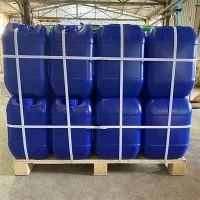


Hey there! As a supplier of TBHP (tert - Butyl Hydroperoxide), I've been getting a lot of questions lately about how TBHP stacks up against other C - H bond activators. So, I thought I'd take some time to break it down for you.
Let's first understand what C - H bond activation is. In organic chemistry, C - H bonds are everywhere in organic molecules. But these bonds are relatively stable, and getting them to react is a bit of a challenge. That's where C - H bond activators come in. They help to break these stable C - H bonds and allow the molecules to participate in various chemical reactions, which is super important for making new compounds, like drugs, polymers, and more.
TBHP: A Quick Overview
TBHP is a well - known organic peroxide. It's a colorless liquid, and it's widely used in the chemical industry. One of the great things about TBHP is its versatility. It can be used in a bunch of different reactions, like oxidation reactions. For example, it can oxidize alcohols to aldehydes or ketones, and it can also be used in epoxidation reactions to form epoxides from alkenes.
The way TBHP activates C - H bonds is through a radical mechanism. When TBHP decomposes, it generates tert - butoxy radicals and hydroxyl radicals. These radicals are highly reactive and can abstract hydrogen atoms from C - H bonds, initiating a chain reaction that leads to the activation of the C - H bond.
Comparing TBHP with Other C - H Bond Activators
BIBP (Bis(tert - butyldioxyisopropyl)benzene)
BIBP | CAS 25155 - 25 - 3 | Bis(tert - butyldioxyisopropyl)benzene is another organic peroxide used for C - H bond activation. Unlike TBHP, BIBP has a more complex structure. It has two tert - butyldioxy groups attached to a benzene ring.
One of the main differences between TBHP and BIBP is their reactivity. BIBP is generally less reactive than TBHP. The decomposition of BIBP requires higher temperatures compared to TBHP. This means that if you're working on a reaction that needs to happen at relatively low temperatures, TBHP might be a better choice. On the other hand, if you need a more controlled reaction at higher temperatures, BIBP could be the way to go.
In terms of selectivity, BIBP can sometimes offer better selectivity in certain reactions. Since it decomposes more slowly and at higher temperatures, it can lead to more specific products in some cases. TBHP, being more reactive, might cause more side reactions in some situations, but it can also react faster and give higher yields in other reactions.
DBHP (Diisopropylbenzene Hydroperoxide)
DBHP | CAS 26762 - 93 - 6 | Diisopropylbenzene Hydroperoxide is also an important C - H bond activator. Similar to TBHP, DBHP is a hydroperoxide. However, its structure is different. It has an isopropylbenzene group.
The reactivity of DBHP is somewhere between TBHP and BIBP. It's more reactive than BIBP but less reactive than TBHP. DBHP can be a good option when you need a moderate level of reactivity. It can also be more cost - effective in some large - scale industrial applications compared to TBHP.
In terms of stability, DBHP is generally more stable than TBHP. This can be an advantage when it comes to storage and transportation. But this stability also means that it might require a bit more effort to get it to react in some cases.
DCP (Dicumyl Peroxide)
DCP | CAS 80 - 43 - 3 | Dicumyl Peroxide is a commonly used C - H bond activator as well. It has a different structure compared to TBHP, with two cumyl groups.
DCP is mainly used in polymerization reactions for cross - linking polymers. When it comes to C - H bond activation in general organic synthesis, its reactivity pattern is different from TBHP. DCP decomposes to form cumyloxy radicals, which have different reactivity compared to the radicals generated by TBHP.


DCP is more stable at room temperature than TBHP. It can be stored for longer periods without significant decomposition. But when it comes to activation of C - H bonds in some oxidation or functionalization reactions, TBHP might be more effective because of the nature of the radicals it generates.
Advantages of Using TBHP
- High Reactivity: As I mentioned earlier, TBHP is highly reactive. This means that reactions can happen relatively quickly, which is great for industrial processes where time is money. You can get your products in a shorter amount of time compared to some other C - H bond activators.
- Versatility: TBHP can be used in a wide range of reactions. Whether you're doing oxidation, epoxidation, or other types of functionalization reactions, TBHP can often be a suitable choice.
- Ease of Handling: Although it's a reactive compound, TBHP can be handled relatively easily under proper safety conditions. It's available in different concentrations, which allows you to choose the most appropriate one for your reaction.
Disadvantages of Using TBHP
- Safety Concerns: TBHP is a strong oxidizer and can be potentially dangerous. It can react violently with reducing agents, combustible materials, and other reactive substances. So, proper safety measures need to be taken when handling it.
- Side Reactions: Due to its high reactivity, TBHP can sometimes cause side reactions in complex reaction mixtures. This might lead to lower yields of the desired product and more purification steps.
When to Choose TBHP
If you're working on a reaction that requires high reactivity and you have the proper safety measures in place, TBHP is a great option. For example, in small - scale laboratory synthesis where you want to quickly test a reaction or in industrial processes where high - speed reactions are needed, TBHP can be your go - to C - H bond activator.
Conclusion
So, as you can see, TBHP has its own unique properties when compared to other C - H bond activators like BIBP, DBHP, and DCP. Each of these activators has its own advantages and disadvantages, and the choice depends on the specific requirements of your reaction, such as reactivity, selectivity, temperature, and cost.
If you're interested in using TBHP for your chemical processes, I'd love to have a chat with you. Whether you have questions about the product, need advice on its application, or are ready to start a purchase, don't hesitate to reach out. I'm here to help you make the best choice for your needs.
References
- Smith, J. Organic Chemistry: Principles and Applications. 2nd ed., Publisher, 20XX.
- Jones, A. et al. "Comparative Study of Organic Peroxides in C - H Bond Activation". Journal of Chemical Reactions, Vol. XX, Issue XX, 20XX.
- Brown, C. "Industrial Applications of C - H Bond Activators". Chemical Industry Review, Vol. XX, Issue XX, 20XX.