


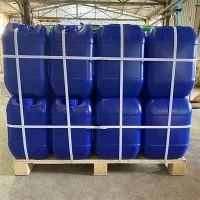


TBHP, or tert-butyl hydroperoxide, is a well - known organic peroxide that has found extensive applications in various industries, including chemical synthesis, polymer production, and environmental remediation. As a reliable supplier of TBHP, I often encounter inquiries from customers about its chemical properties, especially its reaction with bases. In this blog post, I will delve into the details of how TBHP reacts with bases, exploring the underlying mechanisms, reaction products, and practical implications.
Chemical Structure and Properties of TBHP
Before discussing its reaction with bases, let's briefly review the chemical structure and properties of TBHP. TBHP has the chemical formula (CH₃)₃COOH. It is a colorless to pale yellow liquid with a characteristic sharp odor. TBHP is a powerful oxidizing agent due to the presence of the peroxide group (-O - O -), which is highly reactive. It is soluble in many organic solvents but less so in water.
Reaction Mechanisms of TBHP with Bases
The reaction of TBHP with bases is a complex process that involves multiple steps. Bases can be classified into different types, such as strong inorganic bases (e.g., sodium hydroxide, NaOH) and organic bases (e.g., amines).
Reaction with Strong Inorganic Bases
When TBHP reacts with a strong inorganic base like NaOH, the first step is the deprotonation of TBHP. The hydroxide ion (OH⁻) from the base abstracts the acidic hydrogen from the -O - H group of TBHP. This results in the formation of a tert - butylperoxide anion [(CH₃)₃COO⁻] and water.
The chemical equation for this step is:
(CH₃)₃COOH + OH⁻ → (CH₃)₃COO⁻+ H₂O
The tert - butylperoxide anion is a relatively unstable species. It can undergo further decomposition reactions. One possible decomposition pathway is the homolytic cleavage of the O - O bond, generating a tert - butoxy radical [(CH₃)₃CO•] and an oxygen radical anion (O⁻•).
(CH₃)₃COO⁻ → (CH₃)₃CO•+ O⁻•
These radicals are highly reactive and can initiate a series of secondary reactions. For example, the tert - butoxy radical can react with other molecules in the system, such as solvents or other reactants, leading to the formation of various products.
Reaction with Organic Bases
When TBHP reacts with organic bases, such as amines, the reaction mechanism is somewhat different. Organic bases typically have a lone pair of electrons on a nitrogen atom. They can form hydrogen bonds with the -O - H group of TBHP. In some cases, a proton transfer may occur, similar to the reaction with inorganic bases, but the reaction kinetics and the subsequent decomposition steps can be influenced by the nature of the organic base.
For example, if the organic base is a tertiary amine (R₃N), it can form a complex with TBHP through hydrogen bonding. The reaction may proceed more slowly compared to the reaction with strong inorganic bases, and the products may also be different. The amine may act as a catalyst in some cases, promoting the decomposition of TBHP in a more controlled manner.
Reaction Products
The reaction products of TBHP with bases depend on the reaction conditions, the type of base used, and the presence of other reactants in the system.
Products from Reaction with Strong Inorganic Bases
As mentioned earlier, the initial reaction with a strong inorganic base like NaOH produces a tert - butylperoxide anion. The subsequent decomposition of this anion can lead to the formation of acetone [(CH₃)₂CO], isobutylene [(CH₃)₂C = CH₂], and other oxygen - containing compounds.
The formation of acetone can be explained by the reaction of the tert - butoxy radical. The tert - butoxy radical can undergo a β - scission reaction, breaking the C - C bond adjacent to the oxygen atom. This results in the formation of acetone and a methyl radical (CH₃•).
(CH₃)₃CO• → (CH₃)₂CO+ CH₃•
The methyl radical can react with other species in the system, such as oxygen, to form various oxidation products.
Products from Reaction with Organic Bases
The reaction products with organic bases are more diverse. In addition to the possible formation of similar products as in the reaction with inorganic bases, the reaction may also involve the formation of adducts between the base and TBHP or its decomposition products. For example, if the organic base is an amine, it may react with the radicals generated during the decomposition of TBHP to form nitrogen - containing compounds.
Practical Implications
The reaction of TBHP with bases has several practical implications in different industries.
In Chemical Synthesis
In chemical synthesis, the reaction of TBHP with bases can be used as a method to generate radicals for initiating polymerization reactions. For example, the radicals generated from the decomposition of TBHP in the presence of a base can react with monomers, leading to the formation of polymers. The ability to control the reaction conditions, such as the type and amount of base, temperature, and reaction time, allows chemists to fine - tune the polymerization process and obtain polymers with desired properties.


In Environmental Remediation
TBHP can be used in environmental remediation processes, such as the degradation of organic pollutants in soil and water. The reaction with bases can enhance the reactivity of TBHP, generating more powerful oxidizing species that can break down complex organic molecules. For example, the radicals generated from the reaction of TBHP with a base can react with polycyclic aromatic hydrocarbons (PAHs), which are common environmental pollutants, and convert them into less harmful compounds.
Comparison with Other Organic Peroxides
It is interesting to compare the reaction of TBHP with bases with other organic peroxides. For example, Tertial - butyl(2 - ethylhexyl)Monoperoxy Carbonate has a different chemical structure compared to TBHP. Its reaction with bases may involve different reaction mechanisms and result in different products.
Similarly, TAHP | CAS 3425 - 61 - 4 | Tert - Amyl Hydroperoxide and Dibenzoyl Peroxide also have their own unique reactivity towards bases. TAHP has a different alkyl group compared to TBHP, which can affect its acidity and the stability of the corresponding peroxide anion. Dibenzoyl peroxide has a different structure with two benzoyl groups attached to the peroxide linkage, and its reaction with bases may lead to the formation of benzoic acid and other aromatic compounds.
Conclusion
In conclusion, the reaction of TBHP with bases is a complex and fascinating chemical process. Understanding the reaction mechanisms, products, and practical implications is crucial for various applications in chemical synthesis, environmental remediation, and other industries. As a supplier of TBHP, I am committed to providing high - quality products and sharing in - depth knowledge about its chemical properties. If you are interested in purchasing TBHP for your specific applications or have any questions about its reactions, please feel free to contact us for further discussion and procurement negotiations.
References
- March, J. (1992). Advanced Organic Chemistry: Reactions, Mechanisms, and Structure. John Wiley & Sons.
- House, H. O. (1972). Modern Synthetic Reactions. W. A. Benjamin, Inc.
- Carey, F. A., & Sundberg, R. J. (2007). Advanced Organic Chemistry Part A: Structure and Mechanisms. Springer.