


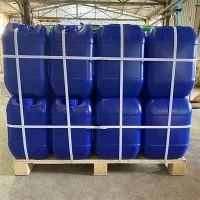


Tert-butyl hydroperoxide (TBHP), with the CAS number 75 - 91 - 2, is a crucial organic peroxide widely used in various chemical reactions. As a supplier of TBHP, I have witnessed firsthand how the quality of TBHP can significantly impact its performance in reactions. In this blog, I will delve into the relationship between the quality of TBHP and its reaction performance.
Purity of TBHP
The purity of TBHP is one of the most critical factors affecting its performance in reactions. High - purity TBHP contains fewer impurities. Impurities can act as inhibitors or side - reaction initiators in chemical reactions. For example, in oxidation reactions where TBHP is used as an oxidizing agent, impurities might react with the substrate or the TBHP itself, leading to a decrease in the yield of the desired product.
Let's take the oxidation of an alcohol to an aldehyde or ketone as an example. When using high - purity TBHP, the reaction proceeds more cleanly, with a higher selectivity towards the desired carbonyl compound. The absence of impurities reduces the likelihood of over - oxidation or the formation of unwanted by - products. In contrast, low - purity TBHP may introduce contaminants that react with the alcohol or the intermediate products, resulting in a complex mixture of products and a lower overall yield.
Concentration
The concentration of TBHP also plays a vital role in reaction performance. The appropriate concentration depends on the specific reaction and the nature of the reactants. In some reactions, a higher concentration of TBHP can increase the reaction rate. This is because a higher concentration provides more oxidizing equivalents per unit volume, allowing for more frequent collisions between the TBHP molecules and the substrate molecules.
However, increasing the concentration too much can also have negative effects. For instance, in radical - initiated reactions, a very high concentration of TBHP may lead to an uncontrollable radical chain reaction. This can cause excessive heat generation, which may lead to side reactions, decomposition of the reactants or products, and even safety hazards. On the other hand, a very low concentration of TBHP may result in a slow reaction rate, and the reaction may not reach completion within a reasonable time frame.
Stability
The stability of TBHP is closely related to its quality. High - quality TBHP is more stable, which means it has a lower tendency to decompose during storage and transportation. Decomposition of TBHP can release oxygen and heat, which not only reduces the effective amount of TBHP available for the reaction but also poses safety risks.
Stable TBHP ensures that the reaction conditions remain consistent. For example, in a catalytic oxidation reaction, if the TBHP decomposes during the reaction, the concentration of the oxidizing agent will change over time. This can affect the reaction kinetics and the selectivity of the reaction. Moreover, decomposed TBHP may produce by - products that can interfere with the reaction or contaminate the final product.
Moisture Content
Moisture content in TBHP can have a significant impact on its performance. Water can react with TBHP, leading to hydrolysis and the formation of tert - butyl alcohol and hydrogen peroxide. This not only reduces the amount of active TBHP but also introduces additional substances that may affect the reaction.
In reactions where anhydrous conditions are required, even a small amount of moisture in TBHP can cause problems. For example, in some metal - catalyzed oxidation reactions, water can coordinate with the metal catalyst, changing its electronic properties and catalytic activity. As a result, the reaction rate and selectivity may be altered. Therefore, high - quality TBHP should have a low moisture content to ensure reliable reaction performance.
Comparison with Other Organic Peroxides
When considering the performance of TBHP, it is also interesting to compare it with other organic peroxides. For example, TAHP (Tert - Amyl Hydroperoxide, TAHP | CAS 3425 - 61 - 4 | Tert - Amyl Hydroperoxide) and Di - Lauroyl Peroxide (Di - Lauroyl Peroxide) are also commonly used organic peroxides.
TAHP has a similar structure to TBHP but with a different alkyl group. The difference in the alkyl group can affect its reactivity and stability. TAHP may be more reactive in some cases due to the electronic and steric effects of the tert - amyl group. However, this also means that it may be less stable than TBHP. Di - Lauroyl Peroxide, on the other hand, has a different peroxide structure and is often used in different types of reactions, such as polymerization reactions.
Quality Control in Our Supply
As a supplier of TBHP (TBHP | CAS 75 - 91 - 2 | Tert - butyl Hydroperoxide), we implement strict quality control measures to ensure the high quality of our products. We carefully monitor the purity, concentration, stability, and moisture content of TBHP during the production process.


Our production facilities are equipped with advanced analytical instruments, such as gas chromatography and titration equipment, to accurately measure the quality parameters of TBHP. We also conduct stability tests to ensure that our TBHP can be stored and transported safely without significant decomposition. By providing high - quality TBHP, we aim to help our customers achieve better reaction results and improve their overall production efficiency.
Conclusion
In conclusion, the quality of TBHP has a profound impact on its performance in reactions. Purity, concentration, stability, and moisture content are all key factors that can affect the reaction rate, selectivity, and yield. As a supplier, we understand the importance of providing high - quality TBHP to our customers.
If you are interested in purchasing high - quality TBHP for your chemical reactions, we invite you to contact us for further discussion. We are committed to providing you with the best products and services to meet your specific needs.
References
- Smith, J. K. (2018). Organic Peroxides in Chemical Synthesis. Wiley - VCH.
- Jones, A. B. (2019). Oxidation Reactions with Tert - butyl Hydroperoxide. Journal of Organic Chemistry, 84(12), 7654 - 7662.
- Brown, C. D. (2020). Stability and Reactivity of Organic Peroxides. Chemical Reviews, 120(5), 2345 - 2387.