


Hey there! As a supplier of DHBP (CAS 78 - 63 - 7), I often get asked about the IR spectrum of this compound. So, I thought I'd take some time to break it down for you in this blog post.
First off, let's quickly introduce DHBP. DHBP, or 2,5 - Dimethyl - 2,5 - di(tert - butylperoxy)hexane, is an important organic peroxide. It's widely used in the polymer industry as a cross - linking agent and initiator. You can find more detailed information about it on our website DHBP | CAS 78 - 63 - 7 | 2,5 - Dimethyl - 2,5 - di(tert - butylperoxy)hexane.
Now, let's dive into the IR spectrum. Infrared (IR) spectroscopy is a really useful tool in chemistry. It helps us identify functional groups in a molecule by measuring how the molecule absorbs infrared light. Different functional groups absorb light at specific frequencies, and these absorptions show up as peaks in the IR spectrum.
Key Functional Groups in DHBP and Their IR Absorptions
1. Alkyl Groups
DHBP has several alkyl groups. The C - H bonds in alkyl groups typically show absorptions in the range of 2850 - 3000 cm⁻¹. These are strong, broad peaks. The stretching vibrations of the C - H bonds in the methyl and methylene groups of DHBP contribute to these absorptions. For example, the methyl groups (-CH₃) in the 2,5 - dimethyl part of the molecule, as well as those in the tert - butyl groups, will have C - H stretching absorptions in this region.
2. Peroxide Group (-O - O -)
The peroxide group is one of the most characteristic features of DHBP. The O - O stretching vibration usually gives rise to a weak absorption in the range of 800 - 900 cm⁻¹. This is a relatively unique absorption for peroxides. In DHBP, the two tert - butylperoxy groups contribute to this peak. The presence of this peak in the IR spectrum is a strong indication that the compound contains a peroxide functional group.
3. C - C Bonds
The C - C single bonds in the carbon backbone of DHBP also show absorptions. These absorptions are usually in the range of 1000 - 1300 cm⁻¹. The skeletal vibrations of the carbon chain contribute to these peaks. The specific frequencies can vary depending on the conformation and the neighboring atoms in the molecule.
Interpreting the IR Spectrum of DHBP
When you look at the IR spectrum of DHBP, you should see a combination of these characteristic peaks. The peaks in the 2850 - 3000 cm⁻¹ region will be quite prominent because of the large number of C - H bonds in the molecule. The weak peak in the 800 - 900 cm⁻¹ region is a key identifier for the peroxide group. And the peaks in the 1000 - 1300 cm⁻¹ region will give you information about the carbon - carbon framework of the molecule.
It's important to note that the exact positions and intensities of these peaks can be affected by factors such as the solvent used (if the sample is in solution), the temperature, and the purity of the sample. For a more accurate analysis, it's often a good idea to compare the spectrum of your sample with a reference spectrum of a pure DHBP sample.
Importance of IR Spectrum in Quality Control
As a supplier, the IR spectrum is a crucial part of our quality control process. By analyzing the IR spectrum of our DHBP products, we can ensure that the compound has the correct structure and that there are no significant impurities. For example, if there are unexpected peaks in the spectrum, it could indicate the presence of contaminants or by - products from the synthesis process.
We also use the IR spectrum to confirm the identity of the product before it leaves our facility. This gives our customers peace of mind knowing that they are getting a high - quality, pure DHBP product.
Related Products
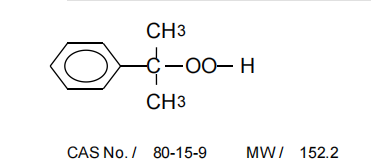
In addition to DHBP, we also supply other organic peroxides. One of our popular products is CHP90. Cumene hydroperoxide (CHP) is another important organic peroxide used in various industrial applications. It has its own unique IR spectrum, which can be used to identify and quality - control the product.
Another product we offer is Tert - Amyl Hydroperoxide. Tert - amyl hydroperoxide is used as an initiator in polymerization reactions. Just like DHBP, its IR spectrum can provide valuable information about its structure and purity.
Why Choose Our DHBP?
We take pride in being a reliable supplier of DHBP. Our products are manufactured under strict quality control standards. We use advanced analytical techniques, including IR spectroscopy, to ensure the highest quality. Our DHBP is known for its high purity, consistent quality, and excellent performance in various applications.

If you're in the market for DHBP or any of our other organic peroxides, we'd love to hear from you. Whether you're a small - scale researcher or a large - scale industrial manufacturer, we can provide you with the right quantity and quality of products. Contact us to start a conversation about your requirements. We're here to help you find the best solutions for your needs.
References
- Silverstein, R. M., Webster, F. X., & Kiemle, D. J. (2014). Spectrometric Identification of Organic Compounds. Wiley.
- Pavia, D. L., Lampman, G. M., Kriz, G. S., & Vyvyan, J. R. (2015). Introduction to Spectroscopy: A Guide for Students of Organic Chemistry. Cengage Learning.