


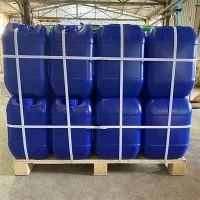


As a supplier of Di-Tert-Butyl Peroxide (DTBP), I understand the importance of accurately measuring its concentration. DTBP is a widely used organic peroxide in various industries, including polymer production, chemical synthesis, and as a fuel additive. Precise concentration measurement is crucial for ensuring product quality, process safety, and compliance with regulatory standards. In this blog post, I will discuss several methods for measuring the concentration of DTBP, their advantages, and limitations.
I. Titration Methods
A. Iodometric Titration
Iodometric titration is one of the most common methods for measuring the concentration of organic peroxides, including DTBP. The principle behind this method is based on the reaction between the peroxide and iodide ions in an acidic medium. The peroxide oxidizes the iodide ions to iodine, which can then be titrated with a standard solution of sodium thiosulfate.
Procedure:


- A sample of DTBP is dissolved in an appropriate solvent, typically a mixture of acetic acid and chloroform.
- An excess of potassium iodide solution is added to the sample, and the mixture is allowed to react in the dark for a specific period to ensure complete reaction.
- The liberated iodine is titrated with a standardized sodium thiosulfate solution using starch as an indicator. The endpoint is reached when the blue color of the starch-iodine complex disappears.
Advantages:
- High accuracy and precision.
- Widely used and well-established method.
- Can be used for a wide range of peroxide concentrations.
Limitations:
- Time-consuming, especially for samples with low peroxide concentrations.
- Requires careful handling of reagents, as iodine is volatile and toxic.
- Interference from other oxidizing agents in the sample can affect the results.
B. Cerimetric Titration
Cerimetric titration is another titration method that can be used to measure the concentration of DTBP. In this method, the peroxide is oxidized by a cerium(IV) solution in an acidic medium. The reaction is followed by titrating the excess cerium(IV) with a standard solution of ferrous ammonium sulfate.
Procedure:
- A known amount of cerium(IV) solution is added to the DTBP sample in an acidic medium.
- The mixture is allowed to react for a specific time to ensure complete oxidation of the peroxide.
- The excess cerium(IV) is titrated with a standardized ferrous ammonium sulfate solution using a suitable indicator, such as ferroin.
Advantages:
- High sensitivity and accuracy.
- Can be used for samples with low peroxide concentrations.
- Less interference from other substances compared to iodometric titration.
Limitations:
- Requires the use of expensive cerium(IV) reagents.
- The reaction conditions need to be carefully controlled to ensure accurate results.
II. Spectrophotometric Methods
A. UV - Visible Spectrophotometry
UV - Visible spectrophotometry can be used to measure the concentration of DTBP based on its absorption of ultraviolet or visible light. DTBP has characteristic absorption bands in the UV region, and the absorbance at a specific wavelength can be correlated to its concentration.
Procedure:
- A series of standard solutions of DTBP with known concentrations are prepared.
- The absorbance of each standard solution is measured at a specific wavelength using a UV - Visible spectrophotometer.
- A calibration curve is constructed by plotting the absorbance against the concentration of the standard solutions.
- The absorbance of the sample is measured, and its concentration is determined from the calibration curve.
Advantages:
- Rapid and non - destructive method.
- Can be used for online monitoring in some cases.
- Suitable for samples with low to moderate peroxide concentrations.
Limitations:
- Interference from other substances in the sample that absorb at the same wavelength can affect the results.
- The method may require careful sample preparation to ensure accurate measurement.
B. Infrared Spectrophotometry
Infrared spectrophotometry can also be used to measure the concentration of DTBP. DTBP has characteristic infrared absorption bands corresponding to its functional groups, and the intensity of these bands can be related to its concentration.
Procedure:
- A sample of DTBP is prepared in a suitable matrix, such as a thin film or a solution.
- The infrared spectrum of the sample is measured using an infrared spectrophotometer.
- The intensity of the characteristic absorption band of DTBP is measured, and its concentration is determined using a calibration curve.
Advantages:
- Can provide information about the chemical structure of DTBP in addition to its concentration.
- Non - destructive method.
Limitations:
- Requires expensive equipment and trained personnel.
- Interference from other substances with similar infrared absorption bands can be a problem.
III. Chromatographic Methods
A. Gas Chromatography (GC)
Gas chromatography is a powerful analytical technique for measuring the concentration of DTBP. In GC, the sample is vaporized and injected into a column, where the components are separated based on their interaction with the stationary phase. The separated components are then detected and quantified.
Procedure:
- A sample of DTBP is dissolved in a suitable solvent and injected into the gas chromatograph.
- The column is heated to a specific temperature program to separate the components of the sample.
- The eluted components are detected using a detector, such as a flame ionization detector (FID) or a mass spectrometer (MS).
- The peak area or height of the DTBP peak is measured, and its concentration is determined using a calibration curve.
Advantages:
- High separation efficiency and sensitivity.
- Can be used to analyze complex mixtures containing DTBP.
- Can provide information about the purity of the sample.
Limitations:
- Requires expensive equipment and trained personnel.
- Sample preparation can be time - consuming, especially for samples with high boiling points.
- DTBP is a thermally unstable compound, and care must be taken to prevent its decomposition during the analysis.
B. High - Performance Liquid Chromatography (HPLC)
High - performance liquid chromatography is another chromatographic method that can be used to measure the concentration of DTBP. In HPLC, the sample is dissolved in a liquid mobile phase and pumped through a column packed with a stationary phase. The components are separated based on their interaction with the stationary phase and are detected as they elute from the column.
Procedure:
- A sample of DTBP is dissolved in a suitable solvent and injected into the HPLC system.
- The mobile phase is pumped through the column at a constant flow rate.
- The eluted components are detected using a detector, such as a UV detector or a refractive index detector.
- The peak area or height of the DTBP peak is measured, and its concentration is determined using a calibration curve.
Advantages:
- Can be used for samples that are thermally unstable or have high boiling points.
- High separation efficiency and sensitivity.
- Can be used for online monitoring in some cases.
Limitations:
- Requires expensive equipment and trained personnel.
- The choice of mobile phase and stationary phase needs to be carefully optimized for each sample.
Conclusion
Measuring the concentration of DTBP accurately is essential for ensuring product quality and process safety. Each method has its own advantages and limitations, and the choice of method depends on various factors, such as the sample matrix, the required accuracy and precision, and the available equipment and resources. As a DTBP supplier, we can provide technical support and guidance on the most suitable method for your specific application.
If you are interested in purchasing high - quality DTBP or need more information about its concentration measurement, please feel free to contact us for procurement and further discussions. We are committed to providing you with the best products and services.
Here are some related products you may be interested in:
- DTAP | CAS 10508-09-5 | Di-tert-amyl Peroxide
- Di-Tert-Butyl Peroxide
- DCP | CAS 80-43-3 | Dicumyl Peroxide
References
- Harris, D. C. (2010). Quantitative Chemical Analysis. W. H. Freeman and Company.
- Skoog, D. A., West, D. M., Holler, F. J., & Crouch, S. R. (2014). Fundamentals of Analytical Chemistry. Cengage Learning.
- McNaught, A. D., & Wilkinson, A. (1997). Compendium of Chemical Terminology: IUPAC Recommendations. Blackwell Science.