


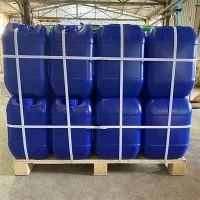


Hey there! As a BIBP (Bis(tert-butylperoxyisopropyl)benzene) supplier, I've often been asked about the analytical methods used to detect BIBP. In this blog post, I'm gonna share some of the key analytical techniques that are commonly employed in the industry.


Gas Chromatography (GC)
Gas chromatography is one of the most widely used methods for detecting BIBP. It's a powerful separation technique that can effectively separate different components in a sample based on their volatility and interaction with the stationary phase in the column.
How does it work? Well, first, the sample containing BIBP is vaporized and injected into the gas chromatograph. The carrier gas, usually an inert gas like helium, then carries the vaporized sample through the column. As the sample components travel through the column, they interact differently with the stationary phase. Components that have a stronger affinity for the stationary phase will take longer to elute from the column, while those with a weaker affinity will elute more quickly.
The detector at the end of the column then measures the amount of each component as it elutes. For BIBP, a flame ionization detector (FID) is often used. The FID is highly sensitive to organic compounds and can provide accurate quantitative results. It works by ionizing the organic compounds in a hydrogen - air flame and measuring the resulting electrical current.
One of the advantages of GC is its high sensitivity and selectivity. It can detect trace amounts of BIBP in a sample, and it can also distinguish BIBP from other similar compounds. However, it does require some sample preparation, such as dissolving the sample in a suitable solvent, and it can be time - consuming, especially if you need to analyze multiple samples.
High - Performance Liquid Chromatography (HPLC)
HPLC is another popular analytical method for detecting BIBP. Unlike GC, which uses a gas as the mobile phase, HPLC uses a liquid mobile phase. This makes it suitable for analyzing compounds that are non - volatile or thermally unstable, which might be a problem for GC.
In HPLC, the sample is injected into a column filled with a stationary phase. The mobile phase, which is a mixture of solvents, then carries the sample through the column. The separation is based on the different interactions between the sample components and the stationary phase. There are different types of HPLC, such as normal - phase HPLC and reverse - phase HPLC. For BIBP, reverse - phase HPLC is often used because it can provide good separation for many organic compounds.
The detector in HPLC can be a UV - Vis detector, which measures the absorption of ultraviolet or visible light by the sample components. BIBP has characteristic absorption peaks in the UV region, so a UV - Vis detector can be used to detect and quantify it.
HPLC has several advantages. It can analyze a wide range of compounds, and it doesn't require the sample to be volatile. It also allows for better control of the separation conditions by adjusting the composition of the mobile phase. However, like GC, it can be relatively expensive, and it requires some technical expertise to operate.
Fourier Transform Infrared Spectroscopy (FTIR)
FTIR is a technique that can be used to identify the functional groups in a compound, including BIBP. It works by shining infrared light through a sample and measuring the absorption of the light at different wavelengths.
Each functional group in a molecule has characteristic absorption frequencies in the infrared region. For example, the peroxy group in BIBP has specific absorption bands that can be detected by FTIR. By comparing the FTIR spectrum of an unknown sample with a reference spectrum of pure BIBP, you can determine whether BIBP is present in the sample.
One of the benefits of FTIR is that it's a non - destructive technique. You can analyze a sample without destroying it, which is useful if you need to reuse the sample for other tests. It's also relatively fast and easy to perform. However, FTIR is more qualitative than quantitative. It can tell you whether BIBP is present, but it might not give you an accurate measurement of the amount of BIBP in the sample.
Mass Spectrometry (MS)
Mass spectrometry is a powerful analytical technique that can provide information about the molecular weight and structure of a compound. It can be used in combination with GC or HPLC (GC - MS or LC - MS) to enhance the detection and identification of BIBP.
In MS, the sample is first ionized, usually by bombarding it with electrons or other ions. The resulting ions are then separated based on their mass - to - charge ratio (m/z) in a mass analyzer. The detector measures the abundance of each ion, and the data is presented as a mass spectrum.
The mass spectrum of BIBP shows characteristic peaks that correspond to its molecular fragments. By analyzing these peaks, you can confirm the identity of BIBP and also get some information about its structure.
GC - MS and LC - MS are very sensitive and selective methods. They can detect trace amounts of BIBP and can distinguish it from other compounds with similar structures. However, they are relatively expensive and require specialized equipment and trained personnel to operate.
Nuclear Magnetic Resonance (NMR) Spectroscopy
NMR spectroscopy is another technique that can be used to analyze BIBP. It works by placing a sample in a strong magnetic field and applying radiofrequency pulses. The nuclei in the sample absorb and re - emit the radiofrequency energy, and the resulting signals are detected and analyzed.
NMR can provide detailed information about the molecular structure of BIBP, such as the number and type of atoms in the molecule and their connectivity. It can also be used to determine the purity of a BIBP sample.
However, NMR is relatively expensive and time - consuming. It also requires a relatively large amount of sample compared to some of the other techniques.
Why These Analytical Methods Matter for BIBP Suppliers
As a BIBP supplier, these analytical methods are crucial for several reasons. Firstly, they help us ensure the quality of our BIBP products. By using these methods, we can accurately measure the purity of BIBP and detect any impurities that might affect its performance.
Secondly, they are important for regulatory compliance. Many countries have strict regulations regarding the quality and safety of chemicals, including BIBP. These analytical methods allow us to provide accurate information about the composition of our products to meet these regulatory requirements.
Lastly, they help us build trust with our customers. When customers know that we use reliable analytical methods to test our products, they can be more confident in the quality of the BIBP they are purchasing.
Other Related Compounds and Their Links
If you're interested in other related organic peroxides, here are some links to more information:
- Tertial - butyl(2 - ethylhexyl)Monoperoxy Carbonate
- TBMA | CAS 1931 - 62 - 0 | Tert - butyl Monoperoxymaleate
- DCP | CAS 80 - 43 - 3 | Dicumyl Peroxide
Let's Talk!
If you're in the market for high - quality BIBP or have any questions about the analytical methods used to detect it, I'd love to hear from you. Whether you're a small - scale user or a large - scale industrial customer, we can work together to meet your needs. Reach out to start a conversation about your BIBP requirements, and let's see how we can collaborate to get you the best product for your application.
References
- Skoog, D. A., West, D. M., Holler, F. J., & Crouch, S. R. (2013). Fundamentals of Analytical Chemistry. Cengage Learning.
- Miller, J. N., & Miller, J. C. (2010). Statistics and Chemometrics for Analytical Chemistry. Pearson Education.
- Harris, D. C. (2016). Quantitative Chemical Analysis. W. H. Freeman and Company.