


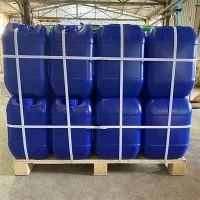


CAS 75 - 91 - 2 corresponds to tert - Butyl hydroperoxide (TBHP), a highly useful organic peroxide in various industrial applications. As a reliable supplier of CAS 75 - 91 - 2, I have in - depth knowledge about its synthesis process and the by - products generated during the synthesis.
Synthesis of tert - Butyl hydroperoxide
The most common method for synthesizing tert - Butyl hydroperoxide is the reaction of isobutane with oxygen in the presence of a radical initiator. The overall reaction can be represented as follows:


(2(CH_3)_3CH+O_2\rightarrow 2(CH_3)_3COOH)
This reaction occurs through a series of radical - based steps. First, the radical initiator generates free radicals, which then react with isobutane to form tert - butyl radicals. These tert - butyl radicals react with oxygen to form peroxy radicals, which further react with isobutane to generate tert - Butyl hydroperoxide and regenerate tert - butyl radicals, thus sustaining the chain reaction.
By - products during synthesis
Acetone
One of the significant by - products in the synthesis of tert - Butyl hydroperoxide is acetone ((CH_3)_2CO). The formation of acetone occurs due to the decomposition of some intermediate radicals. During the radical chain reaction, certain tert - butyl peroxy radicals may undergo a rearrangement and decomposition process. For example, a tert - butyl peroxy radical can break down into acetone and a methyl radical. The reaction can be shown as:
((CH_3)_3COO^{\cdot}\rightarrow(CH_3)_2CO + CH_3^{\cdot})
Acetone is a well - known organic solvent with a wide range of applications in industries such as paint, coatings, and adhesives. In the context of TBHP synthesis, the presence of acetone as a by - product means that additional separation and purification steps are required to obtain a high - purity TBHP product.
tert - Butanol
tert - Butanol ((CH_3)_3COH) is another by - product formed during the synthesis. It can be generated when the tert - butyl radicals react with water molecules present in the reaction system or when the peroxy radicals react with hydrogen - donating species in an alternative pathway. The reaction of a tert - butyl radical with a hydrogen atom from a suitable donor can lead to the formation of tert - butanol:
((CH_3)_3C^{\cdot}+H - X\rightarrow(CH_3)_3COH+X^{\cdot})
tert - Butanol is used as a solvent and as an intermediate in the production of various chemicals, such as methyl tert - butyl ether (MTBE). However, in the synthesis of TBHP, it is an impurity that needs to be removed to meet the quality requirements of the final product.
Di - tert - butyl peroxide
Di - tert - butyl peroxide (DTBP, DTBP | CAS 110 - 05 - 4 | Di - tert - butyl Peroxide) can also be formed as a by - product. It is produced when two tert - butyl peroxy radicals combine with each other. The reaction is as follows:
(2(CH_3)_3COO^{\cdot}\rightarrow(CH_3)_3COOC(CH_3)_3)
DTBP is also an important organic peroxide with applications in polymer chemistry as a radical initiator. But in the synthesis of TBHP, its presence affects the purity of TBHP. Moreover, since both TBHP and DTBP are peroxides, they require careful handling and separation to ensure safety.
Impact of by - products on the synthesis process
The presence of these by - products has several implications for the synthesis process of tert - Butyl hydroperoxide.
Separation and purification
The by - products need to be separated from the main product to obtain a high - purity TBHP. Separation techniques such as distillation, extraction, and adsorption are commonly used. Distillation is often employed to separate components based on their different boiling points. For example, the boiling point of acetone is around 56 °C, while that of TBHP is relatively higher. By carefully controlling the distillation conditions, acetone can be separated from TBHP.
Yield and efficiency
The formation of by - products reduces the overall yield of TBHP. The reaction resources that could have been used to form TBHP are instead consumed in the formation of these by - products. This means that the efficiency of the synthesis process is affected. To improve the yield, reaction conditions such as temperature, pressure, and the concentration of reactants need to be carefully optimized. For instance, a lower reaction temperature may slow down the decomposition reactions that lead to the formation of by - products, thus increasing the yield of TBHP.
Safety considerations
All the products involved in the synthesis, including TBHP and its by - products, are organic peroxides or flammable organic compounds. Organic peroxides are highly reactive and can pose a significant safety hazard. For example, DTBP is a powerful oxidizing agent and can react violently with reducing agents, combustible materials, and even some metals. Therefore, strict safety measures must be implemented during the synthesis, storage, and handling processes to prevent accidents such as fires and explosions.
Applications of tert - Butyl hydroperoxide
Despite the challenges associated with the synthesis and the presence of by - products, tert - Butyl hydroperoxide has a wide range of applications.
Oxidation reactions
TBHP is widely used as an oxidizing agent in organic synthesis. It can be used to oxidize alkenes to epoxides, a reaction that is important in the production of pharmaceuticals, agrochemicals, and specialty chemicals. For example, the epoxidation of propylene using TBHP as an oxidant is an industrial process for the production of propylene oxide.
Polymerization reactions
In polymer chemistry, TBHP can act as a radical initiator. It can initiate the polymerization of various monomers, such as styrene and acrylonitrile, to form polymers with specific properties. The radicals generated from TBHP can react with monomers to start the chain - growth polymerization process.
Our role as a supplier
As a supplier of CAS 75 - 91 - 2, we are committed to providing high - quality tert - Butyl hydroperoxide products. We have advanced production facilities and strict quality control systems to ensure that our products meet the highest standards. Our experienced R & D team is constantly working on optimizing the synthesis process to reduce the formation of by - products and improve the yield and purity of TBHP.
We also offer a comprehensive range of related products, such as Tert - Amyl Hydroperoxide and TBPIN | CAS 13122 - 18 - 4 | Tert - butylperoxy - 3,5,5 - trimethylhexanoate, which are also important organic peroxides in the industry.
If you are in need of tert - Butyl hydroperoxide or any of our other products, we invite you to contact us for procurement and negotiation. We are ready to provide you with the best products and services to meet your specific requirements.
References
- "Organic Peroxides in Polymerization" by B. A. Howell and J. K. Stille.
- "Advanced Organic Chemistry" by Jerry March.
- Industrial literature on the synthesis of tert - Butyl hydroperoxide from leading chemical companies.