


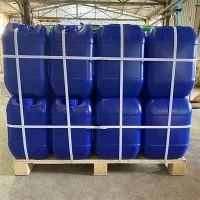


Hey there! As a supplier of BIBP, I often get asked about all sorts of things related to this chemical. One question that pops up quite a bit is, "What is the molar mass of BIBP?" Well, let's dive right into it and break it down.
First off, BIBP stands for Bis(tert - butyldioxyisopropyl)benzene, and it has the CAS number 25155 - 25 - 3. You can find more detailed info about it on this page: BIBP | CAS 25155 - 25 - 3 | Bis(tert - butyldioxyisopropyl)benzene.
To figure out the molar mass of BIBP, we need to understand its chemical formula. The chemical formula of BIBP is (C_{20}H_{34}O_{4}). Now, let's break this down element by element to calculate the molar mass.
We know that the molar mass of an element is the mass of one mole of atoms of that element. The molar mass of carbon (C) is approximately 12.01 g/mol, hydrogen (H) is about 1.008 g/mol, and oxygen (O) is around 16.00 g/mol.
In the formula (C_{20}H_{34}O_{4}), we have 20 carbon atoms, 34 hydrogen atoms, and 4 oxygen atoms.
For carbon: The total mass contributed by carbon is (20\times12.01 = 240.2) g/mol.
For hydrogen: The total mass contributed by hydrogen is (34\times1.008=34.272) g/mol.
For oxygen: The total mass contributed by oxygen is (4\times16.00 = 64) g/mol.
To find the molar mass of BIBP, we just add up these individual masses. So, the molar mass of BIBP is (240.2+34.272 + 64=338.472) g/mol.
Now, you might be wondering why knowing the molar mass of BIBP is important. Well, in the chemical industry, the molar mass is a crucial piece of information. It helps in various calculations, like determining the amount of reactants needed in a chemical reaction, calculating yields, and so on.
BIBP is a type of organic peroxide. Organic peroxides are widely used in different industries. For example, they are used as initiators in polymerization reactions. In the production of plastics and rubbers, organic peroxides like BIBP play a vital role in starting the chemical reactions that turn monomers into polymers.
Let's compare BIBP with some other common organic peroxides. Take DBHP | CAS 26762 - 93 - 6 | Diisopropylbenzene Hydroperoxide and CHP | CAS 80 - 15 - 9 | Cumene Hydroperoxide. Each of these peroxides has its own unique properties and molar mass.
DBHP has a different chemical formula, and its molar mass is calculated based on the elements in its formula. Similarly, CHP also has its own set of elements in its formula, which determines its molar mass. The differences in molar mass can affect their reactivity, stability, and how they are used in different applications.
As a BIBP supplier, I've seen firsthand how important it is for our customers to have accurate information about the products they are using. Whether you're a small - scale researcher or a large - scale manufacturer, having a good understanding of the molar mass and other properties of BIBP can make a big difference in your work.
When it comes to handling BIBP, safety is of utmost importance. Organic peroxides are generally reactive and can be hazardous if not handled properly. We always make sure to provide our customers with detailed safety data sheets and guidelines on how to store, transport, and use BIBP safely.


If you're in the market for high - quality BIBP, we've got you covered. We offer BIBP that meets strict quality standards. Our team is always ready to answer any questions you might have about the product, its properties, or how it can be used in your specific application.
Whether you're looking to use BIBP in a new research project or need a reliable supply for your manufacturing process, we're here to help. Don't hesitate to reach out to us to start a conversation about your BIBP needs. We can discuss quantities, pricing, and delivery options to make sure you get exactly what you need, when you need it.
In conclusion, the molar mass of BIBP is 338.472 g/mol, and this information is key for anyone working with this chemical. If you're interested in learning more or are ready to make a purchase, just get in touch with us. We're eager to work with you and help you achieve your goals.
References
- General Chemistry textbooks for molar mass calculation principles
- Chemical industry literature on organic peroxides and their applications