


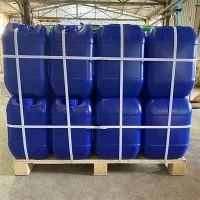


Hey there! As a supplier of TBHP (tert-Butyl Hydroperoxide), I often get asked whether TBHP can be used in the food industry. It's a pretty hot topic, and today, I'm gonna dig deep into this question and share my thoughts based on science and industry knowledge.


First off, let's talk a bit about what TBHP is. TBHP is an organic peroxide. It's a colorless liquid with a sharp, pungent odor. It's widely used in various industrial applications, like in the production of polymers, as a catalyst in chemical reactions, and in the synthesis of other chemicals. But when it comes to the food industry, things get a bit more complicated.
One of the main concerns with using TBHP in the food industry is its toxicity. TBHP is a strong oxidizing agent. If it's ingested in large amounts, it can cause serious harm to the human body. It can irritate the skin, eyes, and respiratory tract. In severe cases, it can even lead to internal organ damage. So, from a safety perspective, using TBHP directly in food products is a big no - no.
However, the food industry is a vast field, and there are some indirect ways where TBHP might have a role to play. For example, in the production of food packaging materials. Some polymers used for food packaging are made through processes that involve organic peroxides like TBHP. During the polymerization process, TBHP can act as a initiator, helping the monomers to link together and form the polymer chains. Once the polymerization is complete, the TBHP is supposed to be fully consumed or decomposed. If the final packaging material meets the relevant safety standards, the small amount of residual TBHP or its decomposition products should not pose a significant risk to food safety.
Let's take a look at some other organic peroxides commonly used in industries. For instance, LPO | CAS 105 - 74 - 8 | Dilauroyl Peroxide is often used in the plastics industry. It's also an initiator for polymerization reactions. Similar to TBHP, it has its own set of safety considerations. Another one is CHP | CAS 80 - 15 - 9 | Cumene Hydroperoxide. It's used in the production of phenol and acetone, which are important raw materials in many industries, including the food packaging industry in some cases. And PMHP | CAS 80 - 47 - 7 | Paramenthane Hydroperoxide is also used in chemical synthesis processes.
Now, let's get back to TBHP. In the food processing equipment cleaning and disinfection area, there might be a potential use. Some industrial - grade cleaning agents contain oxidizing agents to remove stubborn stains and kill bacteria. TBHP's strong oxidizing property could make it an effective component in such cleaning agents. But again, strict regulations need to be followed. After cleaning, the equipment must be thoroughly rinsed to ensure that no TBHP residue remains on the surfaces that come into contact with food.
The regulatory environment also plays a crucial role in determining whether TBHP can be used in the food - related processes. Different countries and regions have their own sets of food safety regulations. These regulations are designed to protect consumers from potential hazards. In most cases, the direct addition of TBHP to food is prohibited. But for its use in food - related industries like packaging production or equipment cleaning, there are specific guidelines on the allowable levels of residual TBHP.
For example, in the United States, the Food and Drug Administration (FDA) has very strict rules regarding the use of chemicals in food and food - contact materials. Any new use of a chemical like TBHP in the food industry would require extensive safety testing and approval from the FDA. In the European Union, the European Food Safety Authority (EFSA) also conducts in - depth risk assessments before allowing a chemical to be used in food - related applications.
So, can TBHP be used in the food industry? The answer is a qualified yes, but with a lot of caveats. It can be used indirectly in some food - related processes like food packaging production and equipment cleaning, as long as strict safety and regulatory requirements are met. But using it directly in food products is not acceptable due to its toxicity.
If you're in an industry that might have a need for TBHP in these indirect food - related applications, I'd love to have a chat with you. Whether you're involved in food packaging manufacturing or food processing equipment maintenance, our high - quality TBHP products can meet your production needs. We ensure that our TBHP products are of the highest purity and quality, and we can provide you with all the necessary technical support and safety data. So, if you're interested in purchasing TBHP for your business, don't hesitate to reach out and start a procurement discussion.
References
- "Handbook of Organic Peroxides"
- Various food safety regulations from the FDA and EFSA.