


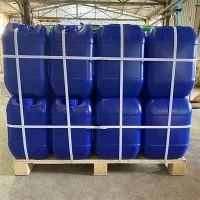


Detecting the presence of a specific compound in a sample is a crucial aspect in various fields, including chemistry, environmental science, and quality control in industries. In this blog, I'll share insights on how to detect the compound with CAS 110-05-4 in a sample. As a supplier of this compound, I've gained valuable experience and knowledge that I'm excited to pass on.
Understanding CAS 110 - 05 - 4
Before diving into the detection methods, it's essential to have a basic understanding of the compound with CAS 110 - 05 - 4. This compound, also known as Di - tert - butyl peroxide, is an organic peroxide widely used as a polymerization initiator, cross - linking agent, and in the production of high - performance polymers. It is a colorless liquid with a characteristic odor and is highly reactive.
Sample Preparation
The first step in detecting the presence of Di - tert - butyl peroxide in a sample is proper sample preparation. The nature of the sample (e.g., solid, liquid, gas) will determine the specific preparation techniques.
If the sample is a solid, it may need to be dissolved in a suitable solvent. For Di - tert - butyl peroxide, common solvents include non - polar solvents such as hexane or toluene. The solid sample is weighed accurately and then added to the solvent in a clean, dry container. The mixture is then stirred or sonicated to ensure complete dissolution.
For liquid samples, filtration may be necessary to remove any particulate matter that could interfere with the detection process. If the sample is a gas, it may need to be adsorbed onto a suitable adsorbent material or trapped in a cold trap for subsequent analysis.
Analytical Techniques
Gas Chromatography - Mass Spectrometry (GC - MS)
GC - MS is one of the most powerful and widely used techniques for detecting organic compounds, including Di - tert - butyl peroxide. In GC, the sample is vaporized and injected into a column where different components are separated based on their volatility and affinity for the stationary phase in the column.
The separated components then enter the mass spectrometer, where they are ionized and fragmented. The mass spectrometer measures the mass - to - charge ratio (m/z) of the ions, and the resulting mass spectrum provides a unique fingerprint of the compound. For Di - tert - butyl peroxide, the characteristic mass fragments can be used to identify its presence in the sample.
The advantage of GC - MS is its high sensitivity and selectivity. It can detect trace amounts of the compound and distinguish it from other similar compounds. However, it requires specialized equipment and trained personnel to operate.
High - Performance Liquid Chromatography (HPLC)
HPLC is another popular technique for analyzing organic compounds. In HPLC, the sample is dissolved in a liquid mobile phase and pumped through a column packed with a stationary phase. The components in the sample are separated based on their interaction with the stationary phase.
For Di - tert - butyl peroxide, a reversed - phase HPLC column with a suitable mobile phase (e.g., a mixture of water and an organic solvent like acetonitrile) can be used. The separated components are detected using a UV - Vis detector or a mass spectrometer. HPLC is suitable for compounds that are not volatile or thermally unstable, like Di - tert - butyl peroxide.
The main advantage of HPLC is its ability to analyze a wide range of compounds under mild conditions. It is also relatively easy to operate and can be automated for high - throughput analysis.
Infrared Spectroscopy (IR)
Infrared spectroscopy measures the absorption of infrared radiation by a compound. Different functional groups in a molecule absorb infrared radiation at specific frequencies, producing a characteristic IR spectrum.
Di - tert - butyl peroxide has characteristic absorption bands in the IR spectrum corresponding to the peroxide functional group (-O - O -). By comparing the IR spectrum of the sample with a reference spectrum of Di - tert - butyl peroxide, its presence can be confirmed.
IR spectroscopy is a non - destructive technique and can provide quick results. However, it may not be as sensitive as GC - MS or HPLC for detecting trace amounts of the compound.


Quality Control and Validation
When using any of these detection methods, it's important to perform quality control and validation steps. This includes using certified reference materials to calibrate the instruments and ensure accurate results.
Blind samples and spiked samples can also be used to test the accuracy and precision of the detection method. A blind sample is a sample with an unknown concentration of the compound, while a spiked sample is a sample to which a known amount of the compound has been added.
Comparison with Other Related Compounds
In the field of organic peroxides, there are several related compounds that may be present in the same sample or have similar properties to Di - tert - butyl peroxide. For example, DCP | CAS 80 - 43 - 3 | Dicumyl Peroxide and TBPIN | CAS 13122 - 18 - 4 | Tert - butylperoxy - 3,5,5 - trimethylhexanoate are also widely used as polymerization initiators.
When detecting Di - tert - butyl peroxide, it's important to be able to distinguish it from these related compounds. The analytical techniques mentioned above, such as GC - MS and HPLC, can usually provide sufficient resolution to separate and identify these compounds based on their different retention times and mass spectra.
Safety Considerations
Di - tert - butyl peroxide is a highly reactive and potentially hazardous compound. When handling samples containing this compound, proper safety precautions must be taken. This includes wearing appropriate personal protective equipment (PPE) such as gloves, goggles, and a lab coat.
The compound should be stored and handled in a well - ventilated area away from heat, flames, and other sources of ignition. In case of a spill or accident, appropriate cleanup procedures should be followed, and emergency response measures should be in place.
Applications of Detection
The detection of Di - tert - butyl peroxide in samples has several important applications. In the polymer industry, it is used to ensure the quality and consistency of polymer products. By monitoring the presence and concentration of Di - tert - butyl peroxide, manufacturers can control the polymerization process and produce polymers with the desired properties.
In environmental monitoring, the detection of Di - tert - butyl peroxide in water, soil, or air samples can help assess the environmental impact of industrial activities. It can also be used to detect potential leaks or spills of the compound.
Conclusion
Detecting the presence of the compound with CAS 110 - 05 - 4 (Di - tert - butyl peroxide) in a sample requires a combination of proper sample preparation, appropriate analytical techniques, and strict quality control. Techniques such as GC - MS, HPLC, and IR spectroscopy are effective tools for this purpose.
As a supplier of Di - tert - butyl peroxide, I understand the importance of accurate detection in ensuring the quality and safety of our products. If you are interested in purchasing Di - tert - butyl peroxide or have any questions regarding its detection or applications, please feel free to contact us for further discussion and procurement negotiation.
References
- Snyder, L. R., Kirkland, J. J., & Glajch, J. L. (2010). Practical HPLC Method Development. Wiley.
- McLafferty, F. W., & Tureček, F. (1993). Interpretation of Mass Spectra. University Science Books.
- Silverstein, R. M., Webster, F. X., & Kiemle, D. J. (2014). Spectrometric Identification of Organic Compounds. Wiley.