


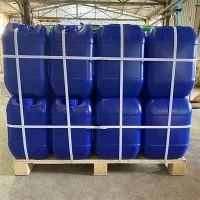


Hey there! As a supplier of water base resin, I've been getting a lot of questions lately about how to improve the abrasion resistance of this stuff. So, I thought I'd put together this blog post to share some tips and tricks that I've picked up over the years.
First off, let's talk about what abrasion resistance actually means. In simple terms, it's the ability of a material to withstand wear and tear caused by friction. For water base resin, this is especially important because it's often used in applications where it'll be exposed to a lot of rubbing, scraping, or other forms of mechanical stress.
One of the most effective ways to improve the abrasion resistance of water base resin is to add fillers. Fillers are small particles that you mix into the resin to give it more strength and durability. There are a bunch of different types of fillers you can use, like silica, alumina, and carbon black. Each type has its own unique properties, so you'll need to choose the one that's best for your specific application.
Silica, for example, is a popular choice because it's really hard and can significantly increase the hardness of the resin. This makes the resin more resistant to scratches and abrasion. Alumina is another great option. It's not only hard but also has good thermal stability, which means it can handle high temperatures without breaking down. Carbon black is often used to improve the electrical conductivity of the resin, but it can also enhance its abrasion resistance by providing a tough, protective layer.
Another thing you can do is to use cross - linking agents. Cross - linking is a process where the molecules in the resin are joined together to form a three - dimensional network. This network makes the resin more rigid and less likely to deform under stress. There are several types of cross - linking agents available, and some of the commonly used ones include MEKP | CAS 1338-23-4 | Methyl Ethyl Ketone Peroxide, TBPIN | CAS 13122-18-4 | Tert - butylperoxy - 3,5,5 - trimethylhexanoate, and TBHP | CAS 75-91-2 | Tert - butyl Hydroperoxide.


MEKP is a powerful cross - linking agent that's often used in polyester resins. It helps to create strong bonds between the resin molecules, which in turn improves the overall strength and abrasion resistance of the material. TBPIN is known for its high reactivity and can be used to achieve rapid cross - linking at relatively low temperatures. TBHP is also a popular choice, especially for applications where you need a more controlled cross - linking process.
The curing process is also crucial when it comes to improving abrasion resistance. Curing is the step where the resin hardens and sets. If the curing process isn't done right, the resin may not reach its full potential in terms of strength and durability. You need to make sure that you follow the recommended curing time and temperature for your specific resin.
For example, some water base resins require a long curing time at a relatively low temperature, while others need a shorter but higher - temperature curing process. By getting the curing conditions just right, you can ensure that the resin forms a strong, uniform structure that's better able to resist abrasion.
Surface treatment is another aspect that shouldn't be overlooked. After the resin has been cured, you can apply a surface coating to further enhance its abrasion resistance. There are various types of coatings available, such as polyurethane coatings and epoxy coatings.
Polyurethane coatings are known for their excellent abrasion resistance, flexibility, and chemical resistance. They can form a tough, protective layer on the surface of the resin, shielding it from damage. Epoxy coatings, on the other hand, are very hard and can provide a high - gloss finish. They're also resistant to chemicals and solvents, which makes them suitable for applications where the resin may come into contact with harsh substances.
Now, let's talk about the resin formulation itself. The type of water base resin you choose can have a big impact on its abrasion resistance. Some resins are naturally more abrasion - resistant than others. For example, acrylic - based water base resins are often used in applications where good abrasion resistance is required. They have a relatively high hardness and can withstand a fair amount of wear and tear.
When formulating the resin, you also need to pay attention to the ratio of the different components. The right balance of resin, solvents, additives, and other ingredients is essential for achieving the best possible abrasion resistance. You may need to do some testing and experimentation to find the optimal formulation for your specific needs.
In addition to these technical aspects, proper storage and handling of the water base resin are also important. If the resin is stored in the wrong conditions, like in a hot and humid environment, it can start to degrade before you even use it. This can affect its performance and reduce its abrasion resistance. Make sure to store the resin in a cool, dry place and follow the manufacturer's instructions for handling and mixing.
Well, there you have it! These are some of the main ways to improve the abrasion resistance of water base resin. As a supplier, I'm always here to help you find the best solutions for your projects. Whether you need advice on choosing the right fillers, cross - linking agents, or coatings, or you're looking for a specific type of water base resin, don't hesitate to reach out. We can have a chat about your requirements and figure out the best approach together.
If you're interested in purchasing our water base resin or have any questions about improving its abrasion resistance, feel free to get in touch. I'm confident that we can provide you with high - quality products and the support you need to make your projects a success.
References
- ASTM International. (20XX). Standard test methods for abrasion resistance of organic coatings.
- Polymer Science Handbook. (20XX). Various chapters on resin properties and modification.